The story is published with the permission of its author, Georgi Bardarov.
Oh, I'll never tire of telling this story. Perhaps because in a single day I reached the end of the world, drank five rakias, sensed God and felt how beautiful life is.
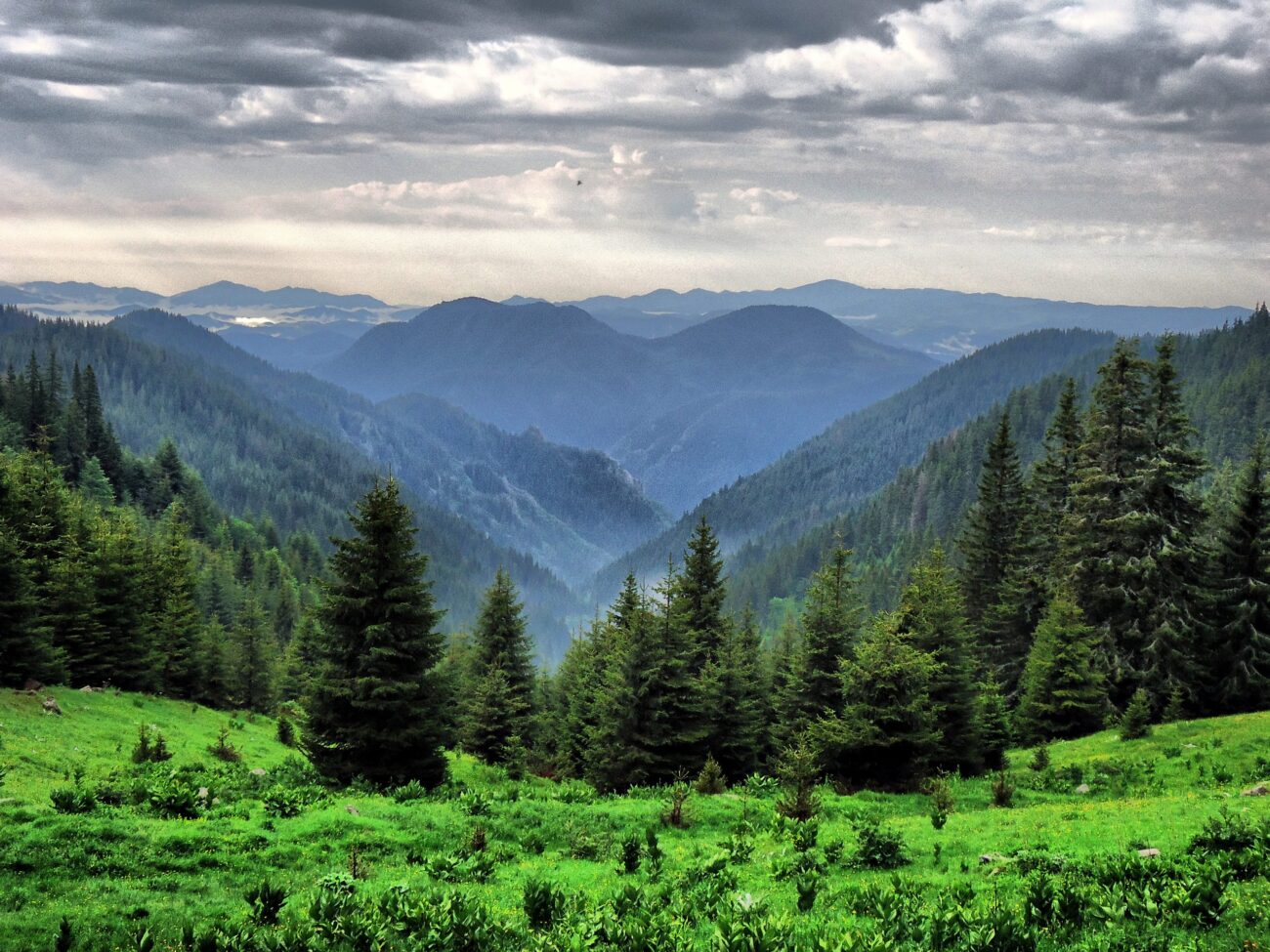
The story itself is a simple one and, of course, it begins with a mad idea that came after a few drinks in a smoky Sofia tavern. It happened in the summer of 2005 when, after a respectable bender, we decided to make a tour of the Rhodopes. Five adults in a little sporty Mazda, in the middle of summer and the worst of the heat, we went flying around the magical Rhodopes. And we had magical adventures.
We travelled along roads that had been roads decades ago. We drank rakia in sheepfolds with eccentric old men who, I am sure, do not exist and whom someone had made up for the occasion. We talked about life with old women who had gathered the wisdom of the centuries, in the middle of the squares of villages that seemed to have stepped straight out of the stories of Radichkov and Pelin. We lived through all manner of contrasts and slept in strange places.
On the first evening nightfall caught us near the Gotse Delchev hut. It turned out there was nothing free, and we were worn out. In the end they put us up to one side of the hut, in former Young Pioneer bungalows. I won't say a word about the mould and the timber – those go down with a drop more of the fiery liquid – but the tariff, now, that's another matter!
I'm reconstructing it from memory:
T A R I F F:
Bed – 1.50 leva
E X T R A S:
Clean sheet – 0.50 stotinki. Masseur – 0.50 stotinki (we apologise, he is on holiday!)
The next evening we were at Beshirov's Castle near Nedelino, where at sunset we lounged in the pool and watched the town grow quiet amid the barking of dogs and the shouts of children. But in the end we reached the end of the world!
How do you get to the end of the world, you ask? Oh, it's very easy! From Smolyan you head straight south. You absolutely must stock up on Smilyan beans in Smilyan. Well, we overdid it a little, because when the smiling waitress appeared we ordered five portions of bean salad, five bean soups, five bowls of beans with sausage and five bean desserts! After so many beans, though, you're full of energy and can make it to the end of the world!
So: from Smilyan you turn south-west, pass Bukata and Mogilitsa, and find yourself in the centre of the village of Arda. Here, at the junction of Patriarch Evtimiy Street and Sinchets Street, you take Sinchets, of course, from there you bear gently onto Trudolyubie, leave Arda and arrive at … Gudyovitsa.
Why is Gudyovitsa the end of the world, you ask? Well, because it is at the end of the topographic map and there is nothing else after it; because it is at the end of Bulgaria and after it there is only the wire mesh of the border fence; and because the road strangely stops right in the centre of the village, in front of the door of the only general store.
If you head that way and decide to stock up on provisions there, forget it. There's only beer and eggs. And when you ask why there is nothing else, the smiling shop assistant will shrug and answer: ‘Well, because the lemonade's run out!’
While we click away with our cameras and breathe in the clean Rhodope air, we strike up a conversation with the locals. One word leads to another, and we get round to explaining why we have come here. But to our geographical thesis that we want to see the end of the world, we get the reply: ‘Aaaaah, no, we're not at the end, there's more after us…’ All five of us are geographers, two of us teach at the University, and we try to explain scientifically that there is nothing after them. We have even brought one of the most complete military topographic maps of Bulgaria. But they insist: ‘Aaaaah, there is, there is, after us comes Gozdyovitsa!’ And they laugh – warmly, melodiously, the Rhodope way.
In the end curiosity wins, and we decide to check whether they are pulling our leg or whether we should throw all our university learning into some recycling bin…
We set off along something that may once have been a road but is now just rubble, overgrown with rank grass turned yellow by the heat. Our young Japanese city lady crawls fearfully up the hill. The sun is already scorching, though it is only 10 in the morning. Insects buzz and there is a scent of wild thyme. Ah, how it smells of wild thyme! You feel like dropping everything and stretching out naked in it, your gaze fixed on the languorous blue of the Rhodope sky.
After about 40 minutes of crawling up the hillside, and after the last possible bend of our native Bulgaria, an old but snow-white sign rises up before us:
Somewhere around here we are ready either to believe in miracles or to tear up our diplomas. We leave the young Japanese lady in the shade and slowly walk into Gozdyovitsa.
The village of Gozdyovitsa was once a big, fine Rhodope village, judging by its houses. Or rather by what is left of them. It numbered more than a hundred tall, proud stone buildings, standing upright like giants.
Life used to bubble here; girls' laughter splashed like a wave, and children scattered the silence with their games. People quarrelled, loved, helped, buried, gave birth, married, parted, gave away. Strong rakia flowed in spring and ruby wine in winter. They fertilised the land with their dust, and from that dust life sprang up through the dozens of fruit trees that now grow wild amid the abandoned yards and the gutted stone remains.
Today the houses are decrepit, half-alive old men leaning on chipped home-made walking sticks. With peeling plaster, broken roof tiles, dentures fallen out and broken spectacles. Houses are like people – if there is no one to warm them with their presence, they wither away in quiet solitude.
It is sadder still when you push one of the doors, hanging by a thread on their hinges and creaking plaintively, and step into these former homes. It is as if a terrible disaster had broken everything at once and the folk had fled in panic. Kitchenware lies strewn across the dusty wooden floorboards – pots and pans in which, it seems, only yesterday someone was cooking their beloved imam bayildi. Suitcases never unpacked, with never-worn clothes sticking out of them, little children's shoes, pages from school exercise books, letters that perhaps never reached the people they were written to. Unspoken thoughts, unshared pain, unlived dreams…
I don't know whether we have the right to disturb the silence and grief of these houses, but in one of them we find a yellowed sheet of paper, covered in small, almost schoolboy handwriting. I am reconstructing it from memory, because even it vanished…
‘Dear Mum and Dad, I am writing to you, but I don't know whether you will ever read these lines… I am well; I have been in America for two years now. There was no way for us to say goodbye…, you know how it was… either I had to run fast without looking back, or…
We went through Greece, Metin and I were together, together we boarded the ship for America. You cannot imagine how endless the ocean is and how blue… I thought we were dying, that I would never see land again, that I would never be able to ask your forgiveness. We travelled for weeks on end before we reached America. America is so strange, everything is so different and big, but the people are the same and smile in the same way.
At first it was very hard, we slept wherever we could, then Metin and I went our separate ways, and in the end I found work. Now I am well, I work in a bakery, I get up early, but you know, I'm used to it. Work doesn't frighten me. I've got lodgings, I'm saving up for a car. I have everything… I have everything… Everything…
Only when it rains and the grief drains away with the rain do I remember how much it hurts and how much I love you…
Forgive me, forgive me…
Your beloved son: Said Metkov
5 April 1967, Sacramento – USA’
We go outside. Something has us by the throat. Something has got into our eyes. And the sky is so deeply blue, so beautiful. Our heads are spinning slightly. We look around. All we can hear is the buzzing of insects; in the distance a donkey snorts. We expect a ghost to spring out from somewhere at any moment.
No ghost springs out, but all of a sudden, from an ivy-wrapped gateway, a lively 75-year-old man appears. He catches sight of us, takes a step back, crouches, slaps his knees with his palms and cries out loudly:
– Ah, people!
At this we too take a step back at his strange reaction, but, paying us no attention, the old man goes on:
– Ah, people, oh myyyyyyyy, people in Gozdyovitsa! Oh myyyyy… – and he clutches his head.
– How on earth did you stray this way, people? Nobody comes here! Nobody has come here for three years! The children don't come any more. God doesn't come. Oh myyyy, people! But wait, wait, I'll bring out the table this very minute, and whatever God has given!
By now we have got acquainted with him, and we protest loudly: – Aaaah, Uncle Stoil, we're only here for a moment, we'll snap a few photos and be off, the road is waiting for us, never mind the table…
That last bit hangs in the air, because Uncle Stoil nimbly slips through the ivy-covered gateway. A minute later, just as nimbly, he comes back with a long wooden table, which he sets down in the middle of the street. Of course, this was once a street; now it is rubble, overgrown with rank grass turned yellow by the heat. And he lays out whatever God has given.
And this morning God has given – fresh-drawn milk, a little honey … and one sweating little bottle, with drops rolling down its smooth sides, full of a fiery golden liquid. Home-made rakia, of course.
– Aaaah, Uncle Stoil, don't do this, we beg you! We can't drink rakia! It's only 10 o'clock – if we start in the morning, where will it all end…
But he is unruffled: – Ohhhh, enough of that nonsense. Do you know when the sun came up… It's been up there for five hours already and done five laps. Go on, have a drink and don't give it a thought!
And as in a tale of who knows how many nights, six wooden chairs appear around the table, almost limping between the stones, and six little glass cups. Which Uncle Stoil instantly fills to the brim. Then he turns his head, spits on the stones, cries out loudly: – Cheers! – and downs his rakia in one. Then he snorts with satisfaction – Aaaaaaaaaah! – and wipes his moistened lips with the back of his sleeve.
Having plucked up a little courage, we too wet our throats, parched by the heat, and … here, you know, is where the heart of the story begins!
The first rakia, ah, the first rakia… The first rakia is something special, hard to explain. Treatises could be written about the first rakia!
It is like first love, like the first plunge into the sea. The first rakia has the power to loosen the knot that has tightened around our little city souls and our minds, which never rest. They are forever calculating how much you have earned, how much you have lost, how much more you still have to earn. The first rakia strikes off the shackles and sets the spirit free. It drives all the demons out of you, all those people who have settled comfortably into your head, with whom you argue and quarrel in your mind all day long, to whom you spend all day proving that you are right, and who, damn it, never agree with you.
The first rakia spreads like olive oil down your windpipe and bathes your whole body in warmth, right down to your little toes. And somehow imperceptibly, yet quite naturally, where only a moment ago you were holding back, you hold out your empty little cup to Uncle Stoil and he fills it again.
And the second rakia, ah, the second rakia… The second rakia is like a revelation; treatises could be written about the second rakia!
After the second rakia you sink back in your chair – self-consciously at first, and then with your whole weight. Until then you have been sitting hunched forward, wound tight as a spring, ready at any moment to leap up and land your fist in the face of some swine, to prove to another how right you are, to overtake a third on the home straight. But after the second rakia, ah, after the second rakia the lump in your throat melts away and your body begins to feel as light as a feather. You stretch your shoulders, settle your bones, breathe in deeply. You fill your lungs with clean Rhodope air and feel life slowly coming back into you.
And Uncle Stoil tells his tales – and he can tell a tale, oh, how he can tell a tale!
Uncle Stoil is like an overfull two-hundred-litre barrel that is only waiting for its tap to be opened for the stories to flow out by themselves. He talks about the village – about its beginning, about its end, about the people who left their traces on these very stones where we are now sitting with him. About how the brides used to pass by with their copper water pails, how the men made wine, how the chain dance wound from the village square all the way to the horizon. About how life once bubbled here and how, little by little, the people turned into birds that forgot the way back to their nests. And how in the end only 6 souls were left – four Muslims and two Christians.
You listen and yet you don't. Nooo, damn it, you don't listen – you live through it together with Uncle Stoil!
In the space of just two rakias more than half a century of the village's life flowed past. In the space of just two rakias we were born and died with it. In the space of just two rakias hundreds of souls passed by us. Smiling, in tears, in love, sad, with happy faces, with eyes swollen from sleeplessness. With scars from a Nagant revolver on their bodies, with wounds from violence on their souls. They talk, laugh, tell stories, complain, shout, swear, sing and walk on without stopping, in crowds, in pairs, one by one.
At that very moment another energetic old man appears beside us, as if out of nowhere. Of medium height, in a short little jumper with the sleeves rolled up above the elbows, with a thin but well-kept moustache. He gives us only a cold nod and, somehow strangely, with a gliding walk, disappears into the heat haze.
– Salim – Uncle Stoil explains to us at once. – We haven't spoken to each other for 40 years. – What do you mean, you don't speak? – Oh, it's a long story, you know… – Oh no, do tell! – It's a very long one, our story… – Never mind, we're in no hurry to be anywhere – strangely, by now we really are in no hurry to be anywhere. Time seemed to stop in its tracks, propped its little fist on the neighbouring chimney and sighed with relief.
– Well, it was like this: once upon a time, a whole string of years ago, both of us were in love with Ayshe. Well yes, but Ayshe chose me, and ever since then he hasn't spoken to me. Ehhhh… – Uncle Stoil shoots a gob of spit onto the stones and wipes his lips with the back of his sleeve. – Then life ran out and Ayshe passed on to a better world, the people flew away, the children forgot us… just six living souls are left here.
– But do you know what happened three years ago? Three years ago I had something like a stroke. In the middle of winter, in the worst of the cold. And Salim set off – in the middle of the night, through the blizzard, through the snowdrifts, to Gudyovitsa, found the doctor… saved my life! When I got better and came back to the village, the two of us got together, got drunk, had a bit of a cry, forgave each other… And since then we're back to not speaking.
At this Uncle Stoil lets fly a curse and pours the third rakia.
The third rakia, ah, the third rakia is a moment stolen from eternity! Treatises could be written about the third rakia!
The third rakia is like a pair of scales. On one pan your good mood sways carelessly, all your cheerfulness, the feeling that you could lift mountains, the urge to strip naked and run across the meadow opposite. On the other pan is the sadness that creeps into your soul like a thief. Nooo, not sadness exactly, more the memory of all the missed chances in life, of all the failures. A barely perceptible pain, like a breath of the north wind on a wonderful May night.
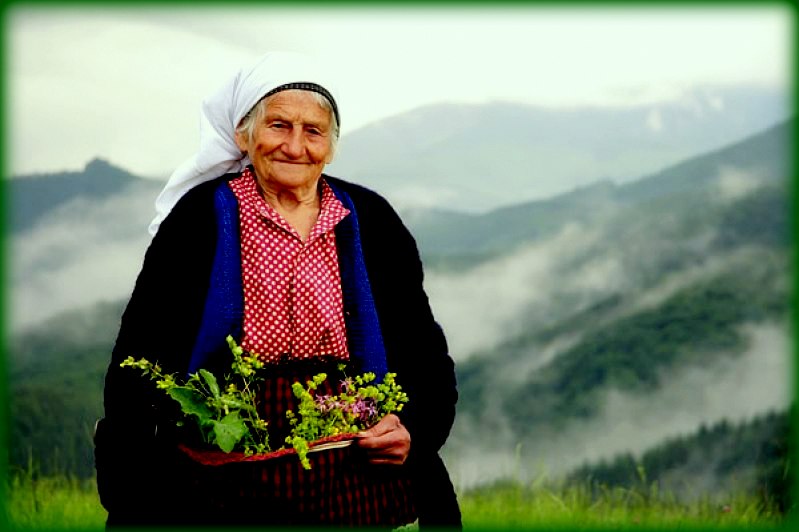
Both pans sway and balance each other. Just as everything sways inside your stomach, wondering which way to come out. Just as the houses, the chimneys, the stones and the pavements sway before your eyes. Just as the birds sway in their untroubled flight. At that moment a brisk, very short and neat old woman with a colourful headscarf comes down the street. Her steps are tiny, but her walk is quick and sure. She greets us with a smile, but as she draws level with the table she squeezes out through that smile a thin but ringing:
– Drunkards… – and she walks on towards the centre. – Fatme! Our telephonist – Uncle Stoil explains. – You mean she used to be a telephonist?… – No, she's a telephonist now. – Oh, come off it, Uncle Stoil, what telephonist? There are only six of you all told, forgotten by everyone…
– That's just it, the telephone is our only link with the world. We kept it in the old mayoralty. And now Fatme goes there every day, seven days a week, from ten till two, to man the telephone. You never know, someone might call us…
Here Uncle Stoil falls silent. We don't immediately grasp why. Our coarsened little city souls, used to taking everything with suspicion, don't grasp why, damn it. But the silence wraps itself around our bodies, like wild vine around the stone walls of the houses. And suddenly, listening to the silence, we hear our hearts beating and become aware of ourselves. And we feel at once sad to the point of tears and tender, somehow warm, as if we had waded into the must of a late-autumn October. And we silently promise ourselves that we will take the number and call… Forgive us, Uncle Stoil, we never called…
– Now, for the sign we take turns on duty once a week – he goes on in a sing-song voice, a thin smile playing on his lips. – What do you mean, you take turns on duty? – Just like that: every Sunday one of us is on duty, goes and washes the sign. – You wash the sign??? – Well, yes, didn't you see how nice and white it is? – Yes, but… – and that ‘but’ hangs in the air, like so many other dropped lines and half-spoken thoughts on this wonderful Rhodope day at the end of Bulgaria and the end of the world…
– The flag, though, we only wash once a month! – The flag? – by now we could swear that Uncle Stoil is good-naturedly pulling our leg.
– Yes, the flag, the one by the former mayoralty. Once a month we gather solemnly, take it down, wash it and solemnly raise it up the flagpole again. Well, we may be at the end of Bulgaria, but we're Bulgarians too, aren't we, we're alive, aren't we…
Here Uncle Stoil takes advantage of our being spellbound by his magical stories and pours us the fourth rakia.
The fourth rakia, ah, the fourth rakia… The fourth rakia is like plunging into a cauldron of ice-cold water, like a leap into the abyss, like a rending groan; treatises could be written about the fourth rakia! The fourth rakia has the power to turn everything around; it is a bell's peal in the black night, when madness pounds at your temples and you are on the border between life and death…
With the fourth rakia all your failures come flooding into your soul. Your fiascos bare their teeth at you like bloodshot-eyed dogs. Your failed loves laugh like wicked witches and point their fingers at you. All the people who have betrayed you, underestimated you, forgotten you line up in two rows and clap with metal palms, and saddest of all – all those whom you yourself have betrayed. With the fourth rakia comes self-pity, and with it, like faithful companions, come the tears.
They are already at the very corners of your eyes and about to spill over and run, when Uncle Stoil saves you with a suggestion:
– Why don't I take you round the village, show you a thing or two, so you can see the flag…
Pleased, we set off after him. We sway a little, but that's from the heat – this August is very hot, blast it, how unusually hot it has turned out! We pass the decrepit houses, the gutted sheepfolds, the empty huts. Now and then a plover calls, and a sleepy cat jumps out of a small heap of hay.
Nooo, we are not sad any more; somehow harmony has come back to us. We are becoming ever more imperishable, ever more at one with nature and the hushed, blind houses. We step on broken windows and hear the ringing laughter of those who once put them in. No, we are not sad; we are sure that somewhere they are glad of us and are waiting for us to tell them about their Gozdyovitsa.
We reach the centre of the village. It too is overgrown with weeds and grass turned yellow by the heat. And here, next to the building of the former mayoralty, we really do see a rusty flagpole with the Bulgarian tricolour fluttering at its top, and to one side of it – a strange stone building. It too is abandoned, although it has kept its stone frame intact on the outside. It looks like a house of worship, but it is hard to tell whether it was a church or a mosque. We turn to Uncle Stoil:
– Uncle Stoil, and what's this? – The temple! – he answers laconically. – Ahaaa, but a church or a mosque? – Well, the temple! – he shrugs in surprise. – Yes, but who prays inside – you Christians, or them, the Muslims?
Here Uncle Stoil looks at us as if we had asked him a question from quantum physics or had not had enough rakia, lets fly a curse and replies: – Well, we all pray inside, why should we split up??? We step into this ‘inside’. There is nothing there – no icons, no frescoes, no candlesticks or candelabra, no names of Muhammad or floral motifs. There is nothing.
No, there is! There is spirit, a great deal, a very great deal of spirit. Green grass sticks up between the plain stone flags of the floor, a shaft of sunlight filters through what was once a little window high up, and the feeling creeps into you that somewhere up there God is sitting, his chin propped on his little fist, smiling with pearly blue eyes. And from your own eyes something trickles after all; you cannot hold it back. Nooo, it's not the rakia, it's not the dust… Uncle Stoil does not leave you be, though, and brings you back to reality – back to the table, to the bottle and his magical stories. In the meantime someone has brought a banitsa. In an old, slightly dented baking tin, wrapped in newspaper with an apron over it. Everyone here is glad of us, the living and the dead, the Christians and the Muslims. Uncle Stoil unfolds the apron, tears the newspaper and breaks up the banitsa with his rough, sinewy hands, on which his blue veins stand out clearly. His knuckles turn white with the effort.
The banitsa smells wonderful. Of cheese, of home, of cosiness. We bite into it. We chew greedily and wash it down with a little ayran. For a moment the talk dies away; only our swallowing gives away that we are alive and that we are here. We get halfway through the banitsa and Uncle Stoil fills the little cups again – the fifth rakia!
The fifth rakia, ah, the fifth rakia… The fifth rakia is the link between hell and paradise; the fifth rakia revives life; with the fifth rakia you find the missing meaning. Treatises could be written about the fifth rakia!
On the fifth rakia you love everyone. You feel like kissing every living creature, stroking every blade of grass, telling people how beautiful life is. Because life really is beautiful… after the fifth rakia. The soul leaves the body, rises above everything perishable and soars like a bird between the clouds and the blue. You discover the most precious thing – the joy of being truly free. You remember what it is like to fly… And right here, maybe from the rakia, maybe from the heat, a crazy question pops into your head and you ask it out loud:
– I say, Uncle Stoil, don't you quarrel among yourselves here over religion? – How do you mean? – Well, Christians and Muslims. The whole world is screaming, everywhere they are fighting, slaughtering… Everywhere they divide God and try to prove to each other which is the truer God! Uncle Stoil looks at you again as if you had asked him a question from quantum physics or had not had enough rakia. – Have you gone mad? Why should we quarrel? What is there to divide? Do you know how these two villages were founded? – I don't, how would I know… – What do you mean you don't know, aren't you an educated man? – Uncle Stoil becomes slightly aggressive; clearly I have stung him with my question. – Well, I am educated, but I don't know…
– I'll tell you this very minute – you have a drink, and I'll tell you the story.
There were once two brothers: Gozdyo and Gudyo. They married, one in the lower mahala (neighbourhood), the other in the upper one. Then the Turks came, and there you are, one a Muslim, the other a Christian… But they're still brothers, aren't they? And they went on helping each other, as they always had. And we too have always been together like that and helped each other. – Uncle Stoil finishes the fifth rakia. Tears appear in the corners of his eyes. And his eyes are so clear, like a little child's. He enfolds us in his warm gaze and waves his hand towards the house – Now wait, let me show you something. Come, come with me and see something…
How he manages it after five rakias nobody knows, but Uncle Stoil springs up nimbly and slips through the ivy-covered gateway; we follow him rather more clumsily and on unsteady feet. His yard too is overgrown with weeds; the steps up to the house are chipped and worn down. The path between the house and the yard wall vanishes, and brambles have wound themselves around the wall itself. A cheerful, good-natured little donkey, its belly sagging almost to the ground, pushes its ears at us. We come out at the other end. His house stands on a sort of little rise, and from it there is a view towards Greece, towards Gudyovitsa and the fields between them. Uncle Stoil shades his eyes with his palms, points to the fields spreading out ahead over the hills and says:
– Do you see that over there? In fact he is pointing at a white, almost rectangular patch that looks strikingly like a graveyard. But why would he show us the graveyard? – Do you know what that is? – No, how could I know! – Why, the burying ground! – The burying ground? Yours or theirs? – Ours – and Uncle Stoil draws a circle with both hands. – Aha, Gozdyovitsa's, then! – No, Gozdyovitsa's and Gudyovitsa's. – You mean that there, together… – Yes. – Christians and Muslims?
– That's exactly what I mean. Do you know how little land we have here? Why waste it on two graveyards! And what for – aren't we all one? Wherever we go, whatever we do, in the end all roads join up. When a Christian passes away, the priest comes; when a Muslim does, the imam; but we all gather together to see off one more little soul that has gone on ahead to wait for us up there!
At this point I stop listening, I stop thinking. I feel the circle has closed and I have come home. Everything is one perfect circle, without beginning and without end. Every step has led me here. After every fifth rakia my soul has flown this far and built its nest on some chimney that has not smoked for years! The tears come from a spring, the tears are sweet… I hug Uncle Stoil and we sit down on the grass… I hear them, I make them out clearly in the blue, transparent air – the voices of all the unborn people of Gozdyovitsa, the voices of all those who never came back. I feel the grass tickling my bare feet. I look down at myself and am struck dumb – why, I'm in short trousers! Lord, not since I was a child… I hear a child's laughter beside me. I look – Uncle Stoil is gone. A merry Gozdyovitsa lad with pearly blue eyes and short trousers is laughing and calling me. He sets off running with all his might down the hill towards the burying ground. I don't give it a second's thought; I leap up and run after him. Will I catch him? For certain…