Municipality · Plovdiv Province
Asenovgrad Municipality
Where it is, nature, what to see, getting there and history.
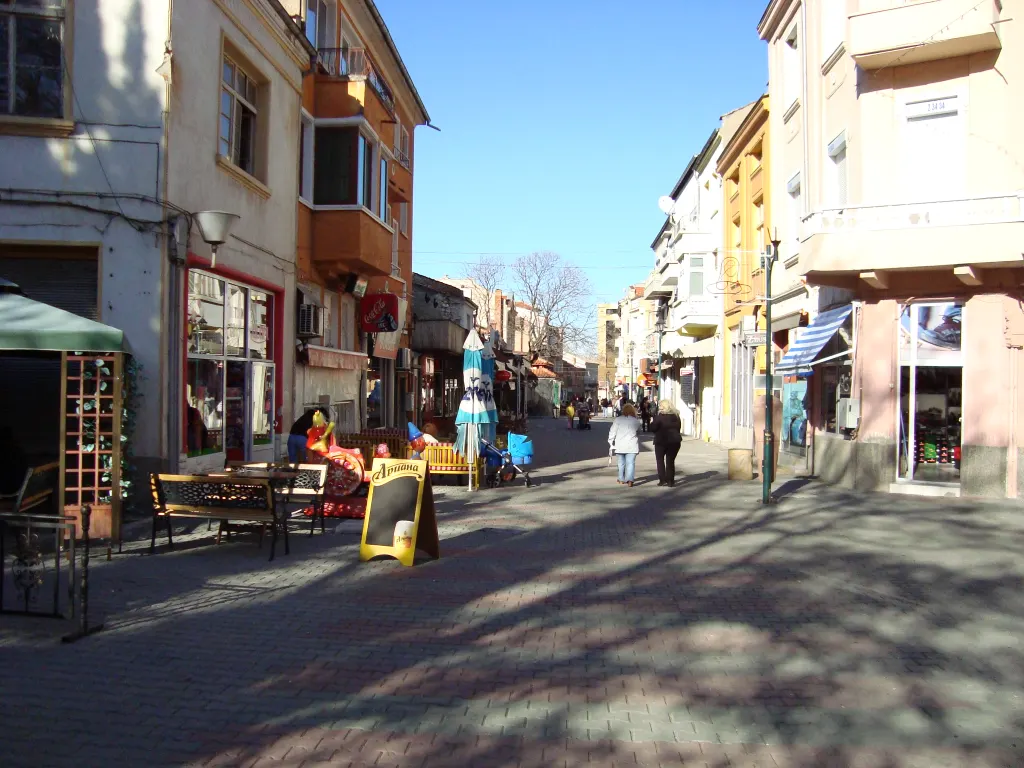

At a glance
- Province
- Plovdiv
- Administrative centre
- Asenovgrad (town)
- Residents
- 57,601 (2021)
- Area
- 665.4 km²
- Settlements
- 29
- Elevation
- 223 m
- Municipal councillors
- 33 (2023)
- Mayor
- Hristo Grudev Grudev (2023)
- Official website
- asenovgrad.bg
Information
Where it is
Asenovgrad Municipality occupies the southern part of Plovdiv Province, where the Upper Thracian Plain and the Haskovo hill country give way to the north-easternmost ridges of the Western Rhodopes. Its neighbours to the north are the municipalities of Rodopi and Sadovo, to the east Parvomay and to the northwest Kuklen, while to the south and southwest it borders Chernoochene, Banite, Laki and Chepelare. The town of Asenovgrad lies where the Asenitsa (Chaya) river leaves its mountain gorge for the plain.
Nature and protected areas
The land rises from the plain in the north, through hills in the east, to ridges of medium height in the south: Dobrostan, the Sinivrashki ridge and the Belocherkovski ridge, where Cherni Vrah (1,549.2 m) stands northeast of Kosovo. The Asenitsa flows through a deep gorge past Narechenski Bani and Bachkovo. On the lands of Bachkovo lies the Chervenata Stena Reserve, and the Usoykata area near Dobrostan has had the status of a natural landmark since 1977. Southeast of the town, at Lale Bair, grows the Rhodope tulip, a Balkan endemic.
What to see
About 2 km above the town by road stands Asen's Fortress, with the fully preserved Church of the Holy Mother of God of Petrich; the fortress is on the list of the 100 National Tourist Sites. In the village of Bachkovo, further up the Asenitsa, is Bachkovo Monastery. Asenovgrad is home to the Palaeontological Museum, a branch of the National Museum of Natural History since 1990, with remains of a deinotherium and a sabre-toothed tiger. Footpaths lead to the St Petka Monastery and Arapovo Monastery, and northwest of Muldava is the 40 Springs Reservoir.
Getting there
Asenovgrad is linked to Plovdiv by the Plovdiv–Asenovgrad railway line; trains from the town's station run only to Plovdiv and Krumovo, and the town also has a bus station. National roads II-58 and II-86 and several third-class roads cross the municipality; from the town the first-class road leads south to Smolyan, and another road continues southeast to Kardzhali. Footpaths to the Momina Salza and Bezovo huts and to Dobrostan are described in the routes from Asenovgrad.
History
Antiquity
In the Lopkite area near Dolnoslav, a Neolithic cult centre has been investigated which, according to the municipality, served the prehistoric communities of the whole of present-day southern Bulgaria. On the site of today's town archaeologists have found a Thracian settlement that was still inhabited in Roman times; four sanctuaries of the Thracian Horseman and the Balantash rock sanctuary have also been found in the area. Greek authors link the founding of Stenimachos with colonists from the Euboean city of Histiaea in the 7th century BC. There is more about the Thracians in the mountains in the article The Thracians in the Rhodopes.
The Middle Ages and the Ottoman period
The name Stenimachos first appears in the 1083 charter (Typikon) of Bachkovo Monastery, written on the orders of Gregory Pakourianos. After the Battle of Klokotnitsa in 1230, Tsar Ivan Asen II strengthened the fortress of Petrich and left an inscription on a rock above its entrance; it later came to be called Asen's Fortress. The town often changed hands between Bulgarian and Byzantine rule, and the Ottomans took it around 1363 or 1371. In the Ottoman period Stanimaka was a waqf (pious endowment) of Sultan Suleiman I, and in 1847 the first Bulgarian church with a school was built in the Marashka mahala (neighbourhood).
After the Liberation
Stanimaka was liberated on 6 January 1878 and remained in Eastern Rumelia as a separate administrative unit; at the Unification in 1885, volunteers from Stanimaka joined a large detachment. After 1906, and especially after the Kalfov–Politis Agreement, the Greeks left the town, which took in Bulgarian refugees from present-day northern Greece. In 1934 Stanimaka was renamed Asenovgrad in honour of Ivan Asen II. In the second half of the 20th century large enterprises were built near the town, among them the non-ferrous metals plant.
Today
Asenovgrad is known for its wine-making tradition, linked to Stanimashka Malaga and Mavrud, and for religious tourism: around the town there are five monasteries and dozens of churches and chapels. Celebrations with a local character include Trifon Zarezan at the St Tryphon chapel, the pilgrimage to the St Petka Monastery around the anniversary of Vasil Levski's death, and the procession with the revered icon of the Mother of God to Bachkovo Monastery on 15 August. The town festivities are held in the last week of May.
Mayors by term
| Term | Mayor | Party |
|---|---|---|
| 2023– | Hristo Grudev Grudev | GERB |
| 2019–2023 | Hristo Grudev Grudev | GERB |
| 2011–2019 | Emil Karaivanov | BSP |
| 2003–2011 | Kiril Trendafilov | SDS |
| 1995–1999 | Bozhidar Malinov | BSP |
| 1991–1995 | Simeon Todorinov | SDS |
Cultural calendar
February
- Trifon Zarezan – wine festival with folk wrestling
A traditional wine festival with a home-made wine competition and folk wrestling.
April
- Book Days
A month-long series of readings, meetings with authors and literary competitions.
- Asenovgradski Bayri (sports competition with a festival)
A sports competition with an accompanying festival programme.
May
- Knife-making and Blacksmithing Fair (Fair of Blacksmithing and Crafts)
An annual fair with an artistic blacksmithing competition and local craftspeople, part of the town festival.
- Asenovgrad Day
The town festival, with awards for honorary citizens, a parade of professions, concerts and exhibitions.
- May Cultural Festivities
A series of theatre performances, concerts and exhibitions, and a concert by the music schools.
June
- Enyovden
A traditional celebration with the Kalinitsa custom and a children's festivity.
- Kalinitsa ritual
Little girls as ‘sun brides’ in white dresses; a liturgy and a procession to the Town Park.
- Paisius Days
Tribute at the memorial plaque to Paisius of Hilendar, and literary meetings.
September
- Mavrudovo Horo
A folklore festival for amateur dance clubs, part of the autumn festivities.