Municipality · Pazardzhik Province
Batak Municipality
Where it is, nature, what to see, getting there and history.

At a glance
- Province
- Pazardzhik
- Administrative centre
- Batak (town)
- Residents
- 4,869 (2021)
- Area
- 677.3 km²
- Settlements
- 3
- Elevation
- 1,036 m
- Municipal councillors
- 13 (2023)
- Mayor
- Georgi Stefanov Harizanov (2023)
- Official website
- batak.bg
Information
Where it is
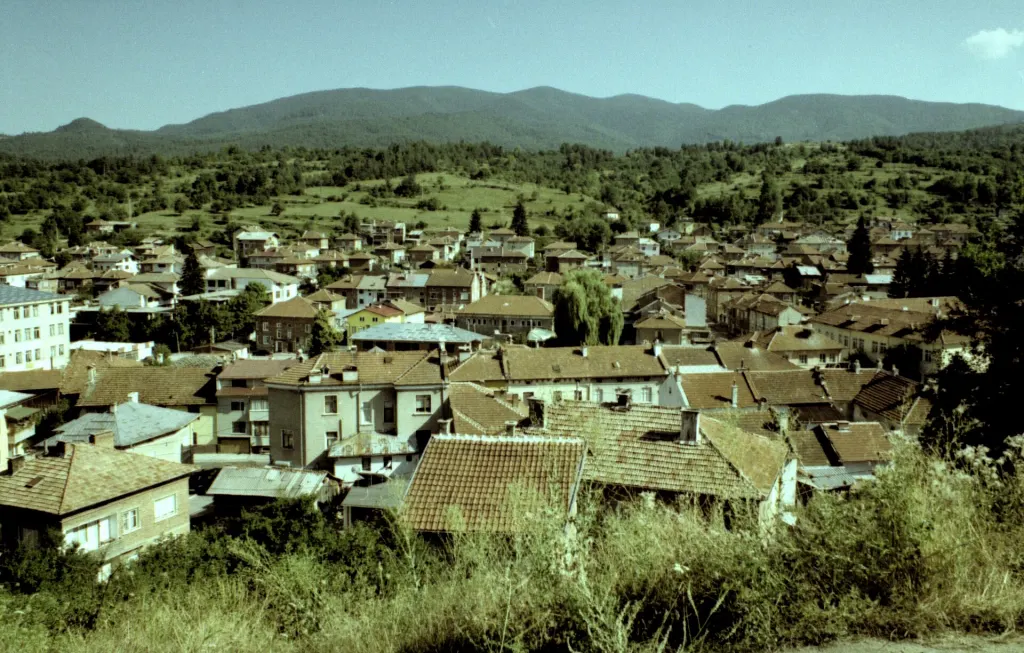
Batak Municipality occupies the south-eastern part of Pazardzhik Province and lies entirely in the Western Rhodopes. It borders Sarnitsa to the south-west, Velingrad and Rakitovo to the north-west, Peshtera and Bratsigovo to the north, and Devin, Borino and Dospat in Smolyan Province to the east, south-east and south. The town of Batak lies in a basin on both banks of the Stara Reka, surrounded by hills that the locals call barda.
Nature and protected areas
The Batak Mountain covers nearly nine-tenths of the municipality, and to the north of it the Batak basin is flooded by the Batak Reservoir. South of the town rises Batashki Snezhnik peak (2,082 m), the highest point in the municipality. The waters of the Gashnya, Devinska, Matnitsa and Stara Reka rivers fill the seven reservoirs of the Batak Hydropower Cascade. The municipality is home to the Beglika Reserve, together with the Golyam Beglik Reservoir, and the Dupkata Reserve.
What to see
Batak has the stone church of St Nedelya, dating from 1813 and turned into a museum-ossuary after 1876, while the Historical Museum and the Balinov House, an ethnographic museum since 1968, tell the story of the town's past; Batak is on the list of the 100 National Tourist Sites. By the reservoir is the resort of Tsigov Chark, and in the Shiroka Polyana area are the Shiroka Polyana and Toshkov Chark reservoirs, which are good for fishing.
Getting there
The main road link is national road II-37, which runs through the municipality for 45.8 km; road III-376 also starts from it, and road III-377 ends here. The town of Batak is 15 km from Peshtera and 15 km from Rakitovo, 27 km from Velingrad and 35 km from the provincial capital, Pazardzhik, and Plovdiv is about 55 km away by road.
History
Antiquity
In 1958 Professor Yosif Shopov discovered an Old Stone Age site in the Kremenete area near Beglika, and later a second one in the Slancheva Polyana area near Shiroka Polyana. In the Batak area 20 fortresses from Thracian, Roman, Byzantine and Slavic times are known, along with over 10 churches and monasteries, Thracian burial mounds and Roman bridges. Before the Roman conquest these lands belonged to the Thracian tribe of the Bessi. More about the Thracians in the Rhodopes.
The Middle Ages and the Ottoman period
According to tradition, the village was first called Batevo, and the name Batak, perhaps from the Turkish word for mud, appeared under Ottoman rule. An inscription of 1592 on a fountain at the Krichim Monastery contains the name Batak and the names of its builders, who were from Batak. During the Bulgarian National Revival, Abbot Yosif, who restored the Rila Monastery, and Georgi Busilin, the author of a primer of 1844, came from Batak. As the April Uprising was being crushed in May 1876, bashi-bazouks led by Ahmed Aga Barutanliyata carried out a mass killing of the Bulgarians in Batak, known as the Batak massacre; around two thousand people besieged in the church of St Nedelya died there.
After the Liberation
In 1899 a branch of the Macedonian Organisation was founded in Batak. In the First Balkan War of 1912 five men from Batak were volunteers in the Macedonian-Adrianopolitan Volunteer Corps; the same year, building began on a new church, the Dormition of the Most Holy Mother of God, because St Nedelya had been turned into a museum-ossuary after the massacre. In 1964 Batak was declared a town.
Today
Recreation, fishing and hunting tourism are developing around the municipality's reservoirs, and the town has a vocational secondary school of forestry and woodworking. In 2011 the Holy Synod proclaimed those killed in the Batak massacre new martyrs, and their memory is honoured on 17 May, when the anniversary of the uprising is also marked. On Cheesefare Sunday (Sirni Zagovezni), tall ritual bonfires called protsepi are lit on the hills, and on 15 August a regional folklore fair is held.
Mayors by term
| Term | Mayor | Party |
|---|---|---|
| 2023– | Georgi Stefanov Harizanov | BSP for Bulgaria |
| 2019–2023 | Petar Krumov Paunov | ABV |
Cultural calendar
January
- Sudzhuk and Appetiser Festival
A winter festival with tastings of sudzhuk and local appetisers and a folklore programme on the square.