Municipality · Pazardzhik Province
Bratsigovo Municipality
Where it is, nature, what to see, getting there and history.

At a glance
- Province
- Pazardzhik
- Administrative centre
- Bratsigovo (town)
- Residents
- 7,355 (2021)
- Area
- 229.4 km²
- Settlements
- 7
- Elevation
- 450 m
- Municipal councillors
- 13 (2023)
- Mayor
- Nadezhda Borisova Kazakova (2023)
- Official website
- bratsigovo.egov.bg
Information
Where it is
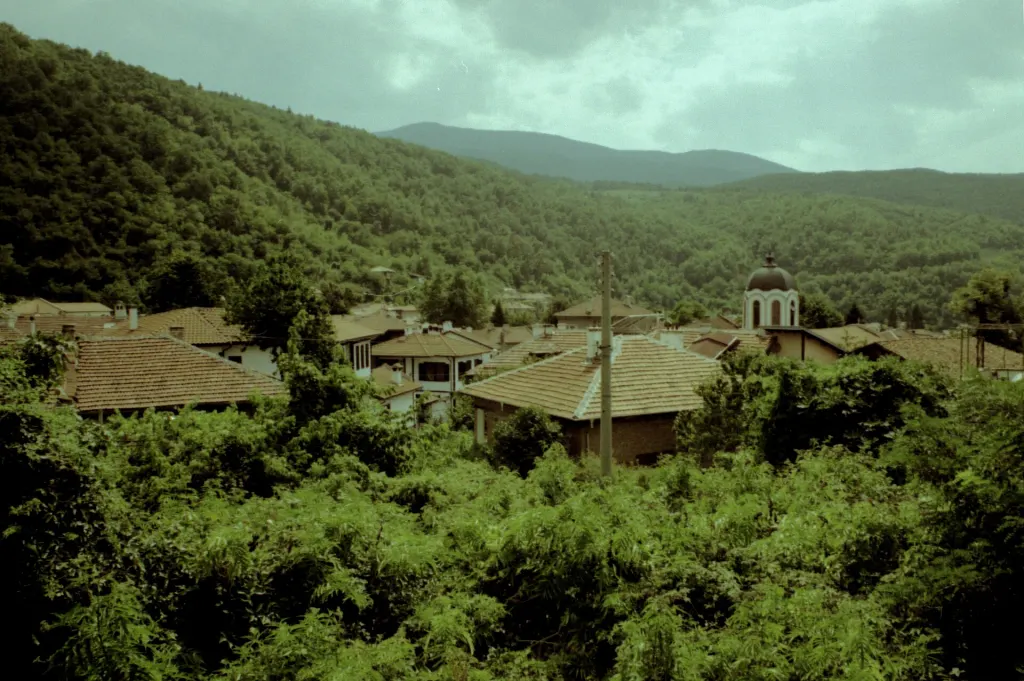
Bratsigovo Municipality is in the eastern part of Pazardzhik Province and lies entirely in the Western Rhodopes, on the northern slopes of the Batak Mountain. It borders Batak to the south and south-west, Peshtera to the west, Pazardzhik to the north, the Plovdiv Province municipalities of Stamboliyski and Krichim to the north-east and east, and Devin in Smolyan Province to the south-east. The town of Bratsigovo lies in a basin between the Peshtera basin and the Thracian Plain, close to Peshtera and Krichim.
Nature and protected areas
Nearly 80% of the municipality is taken up by the Ravnogor ridge, the north-easternmost part of the Batak Mountain; its highest peak, Sandzhak (1,878 m), lies south-west of the village of Ravnogor. The main river is the Stara Reka, which the Ravnogorska river joins north of the town. The Vacha river flows along the border with Krichim and Devin, and the western shores of the Vacha and Krichim reservoirs lie within the municipality. Under protection are the Atoluka and Tamra protected sites, the Vinishte historic site near Ravnogor, an age-old beech in Rozovo and the Zhrebichko architectural reserve.
What to see
The Historical Museum in Bratsigovo is one of the 100 National Tourist Sites and is devoted mainly to the April Uprising; it also includes the house-museum of Vasil Petleshkov, an ethnographic collection on rose production and crafts, and the Bratsigovo Architectural School exhibition. The bell tower of the church of St John the Forerunner (1884–1886) is 35 m high. The town also has the Damov House and the Apriltsi memorial park, and near the town are the ruins of the Vatrahokastron fortress. In the village of Ravnogor there are Thracian burial mounds with a domed tomb.
Getting there
The municipality is served by third-class national roads: sections of roads III-375, III-377 and III-8004 run through it. The Stamboliyski – Krichim – Peshtera railway line crosses its northern part from east to west. Bratsigovo is about 45 km from Plovdiv and about 140 km from Sofia.
History
Antiquity
Around Bratsigovo, traces of a Thracian burial have been found in the Klisurata area, and a masonry grave came to light during the building of the road to Ravnogor in 1924. When a spring was tapped in the Sveta Troitsa area in 1928, coins from the 4th century BC and from the 2nd–4th centuries were found. The walls, tools and vessels in the Vartyan Kamen area date from Roman times, and in 1927 a bronze figurine of Pallas Athena was unearthed in the Lupovo area. In Isperihovo there are Thracian tombs from the early Christian era.
The Middle Ages and the Ottoman period
Near the town are the ruins of the 12th-century Vatrahokastron fortress. Around 1770 or 1791, some 150 families from the Kostur region settled in Bratsigovo, among them people from the villages of Slimnitsa, Omotsko and Oreshets. They brought the building craft with them, and from it grew the school of the Bratsigovo master builders, who built churches, houses and bridges across the Bulgarian lands. On 3 May 1876 Vasil Petleshkov proclaimed the April Uprising here; after it was crushed he was captured and died under torture.
After the Liberation
Bratsigovo was recognised as a town by a decree of 1892. In 1899 people from Bratsigovo founded a branch of the Macedonian Organisation named after Vasil Petleshkov, and in 1912 five men from Bratsigovo became volunteers in the Macedonian-Adrianopolitan Volunteer Corps. In 1934 Aydanovo, Yasa Koria and Chanakchievo were given their present names of Isperihovo, Ravnogor and Rozovo. The town museum opened in 1926, the House of Culture was built in 1956, and in 1976, on the centenary of the uprising, Petleshkov's house-museum opened its doors.
Today
Today the municipality's businesses are mainly in garment making, woodworking and food processing. Because of the mild climate, many people in Bratsigovo still grow the oil-bearing rose, which was once the main livelihood here. The town's festival day is 12 May, when the anniversary of the April Uprising is marked, and the chitalishte (community centre), founded in 1874 with Petleshkov's money, remains the hub of cultural life.
Mayors by term
| Term | Mayor | Party |
|---|---|---|
| 2023– | Nadezhda Borisova Kazakova | GERB |
| 2019–2023 | Nadezhda Borisova Kazakova | GERB |
Cultural calendar
May
- Town Festival and the April Uprising
Town festival with a historical re-enactment of the events of the April Uprising of 1876.
