Municipality · Pazardzhik Province
Velingrad Municipality
Where it is, nature, what to see, getting there and history.

At a glance
- Province
- Pazardzhik
- Administrative centre
- Velingrad (town)
- Residents
- 32,951 (2021)
- Area
- 604.5 km²
- Settlements
- 21
- Elevation
- 755 m
- Municipal councillors
- 29 (2023)
- Mayor
- Kostadin Todorov Koev (2023)
Information
Where it is
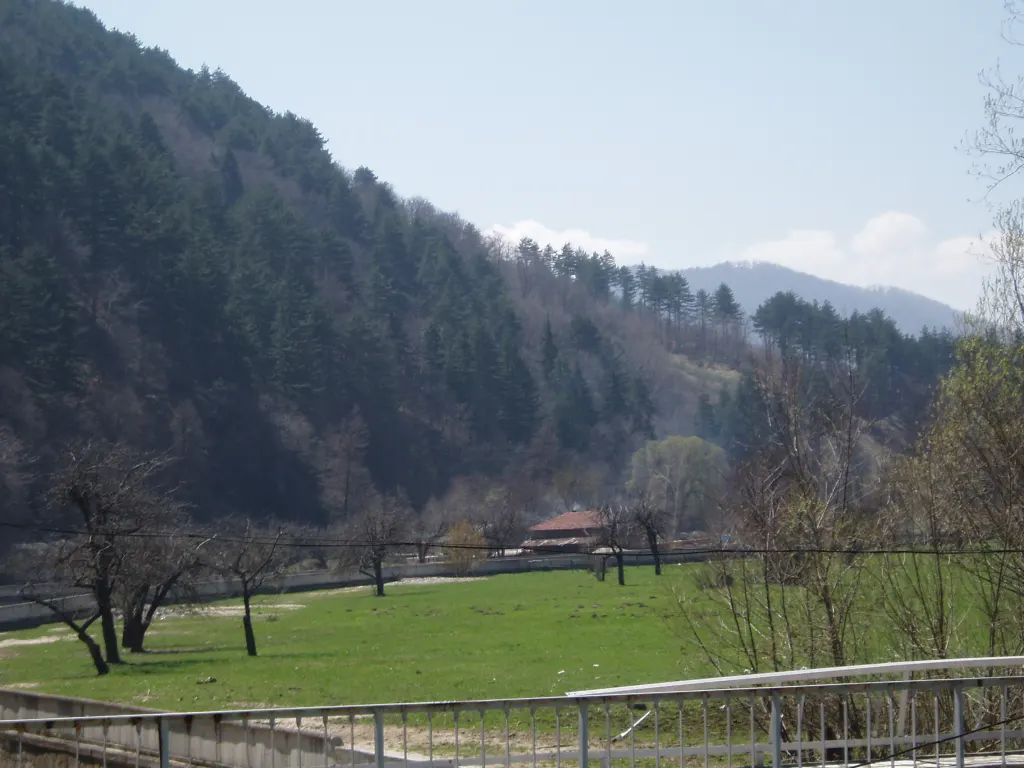
Velingrad Municipality occupies the south-western corner of Pazardzhik Province, and its whole territory lies in the Western Rhodopes. Its heart is the western, lower part of the Chepino Valley, where the town of Velingrad lies. The municipality borders Belovo to the north, Septemvri to the north-east, Rakitovo to the east, Batak to the south-east, Sarnitsa to the south, and Belitsa and Yakoruda in Blagoevgrad Province to the west.
Nature and protected areas
The terrain is mountainous: to the south rises the Syutkya ridge, with Golyama Syutkya peak (2,186 m) on the border with Rakitovo; in the south-west is the Veliyshko-Videnishki ridge, with Srebren peak (1,900.5 m); and to the north stretches the Alabak ridge. The main river is the Chepinska river, whose uppermost course is called the Ribna Reka. Nearly 80 warm mineral springs rise around the town, and in the Chepino quarter is the karst spring of Kleptuza.
What to see
In the Chepino quarter, the park around the Kleptuza spring with its two lakes is one of the symbols of Velingrad; the first lake was created in 1933. In the Kamenitsa quarter, next to the Holy Trinity church, is the Historical Museum, with displays on Vela Peeva and on the opera singer Nikolay Gyaurov and a large collection of decorated Easter eggs. Villa Rayna, dating from 1928, is a cultural monument, and the resort village of Yundola lies on a saddle between Rila and the Rhodopes.
Getting there
The Septemvri – Dobrinishte narrow-gauge railway crosses the municipality from east to west; Velingrad station is in the Ladzhene quarter, and Chepino has the Velingrad-Yug stop. By road you arrive on national road II-84, and roads III-842 and III-843 start in the municipality, the latter continuing south to Sarnitsa. The town is 44 km from Pazardzhik and 81 km from Plovdiv.
History
Antiquity
Archaeological layers show that the Chepino area was inhabited by Thracians as early as the 6th–5th centuries BC, with the most traces left by the Bessi tribe: burial mounds, necropolises and the walls of settlements and fortresses. There are two mounds in the Yundola area, and others lie beneath the waters of today's Batak Reservoir, once the Batak Marsh. Clay pipes for mineral water, road paving and coins from after the Roman conquest of the Rhodopes in AD 46 have been found in the Chepino area. More about the Thracians in the Rhodopes.
The Middle Ages and the Ottoman period
At the beginning of the 6th century Slavs settled in the valley, from the Dragovichi tribe according to Professors Marin Drinov and Petar Petrov; under Khan Malamir these lands became part of the Bulgarian state. After Tsar Kaloyan, the nearby Tsepina fortress was the capital of Despot Aleksiy Slav, and in 1371–1373 it and the whole Chepino area probably fell under Ottoman rule. An Ottoman register of 1516–1517 records the first Muslim households, and in 1816 the people of Kamenitsa built the Holy Trinity church.
After the Liberation
During the Russo-Turkish War of 1877–1878 the Muslims of the valley hid in the mountains, and Ladzhene was temporarily left deserted. After the Liberation of 1878, woodworking workshops and businesses appeared in the area. In 1934 the village of Banya Chepino was renamed Chepino. In 1948 the villages of Kamenitsa, Ladzhene and Chepino were merged into a new town, named Velingrad after the partisan Vela Peeva. In 1987 the abolished municipality of Sarnitsa was joined to the municipality, and it separated again in 2014.
Today
Today Velingrad's economy rests on logging, woodworking and tourism around the mineral springs. The town has sanatoriums, clinics and hotels, and balneotherapy includes drinking mineral water, inhalations and baths. Some of the factories from the socialist period, among them mechanical engineering and marble processing, no longer operate. Every summer the municipality holds the Velingrad Days of Culture, and before Easter the Historical Museum puts on exhibitions and workshops on decorating eggs with wax.
Mayors by term
| Term | Mayor | Party |
|---|---|---|
| 2023– | Kostadin Todorov Koev | GERB |
| 2019–2023 | Kostadin Todorov Koev | GERB |
| 2015–2019 | Kostadin Koev | GERB |
| 2007–2015 | Ivan Lebanov |
Cultural calendar
July
- Velingrad Day
The town festival that opens the July programme of brass band concerts, a jazz festival and folklore evenings.
- Velingrad Days of Culture (53rd edition)
The town's traditional cultural programme; in 2026 it is the 53rd edition.
- Horo at the Spring Folk Dance Festival
A folk dance festival.
- Jazz Velingrad
A jazz festival.
Sources
- Velingrad Municipality - bg.wikipedia.org
- File: Kv. Chepino, 4601 Velingrad - Wikimedia Commons
- Velingrad Municipality — Wikipedia (Bulgarian)
- Velingrad — Wikipedia (Bulgarian)
- Velingrad Municipality — official website
- Bulgaria Travel, Ministry of Tourism — Historical Museum – Velingrad
- Bulgaria Travel, Ministry of Tourism — Velingrad
- Programme of the 53rd Velingrad Days of Culture 2026 (velingrad.bg) (2026)