PHOTOS
VIDEOS
BRIEF DESCRIPTION
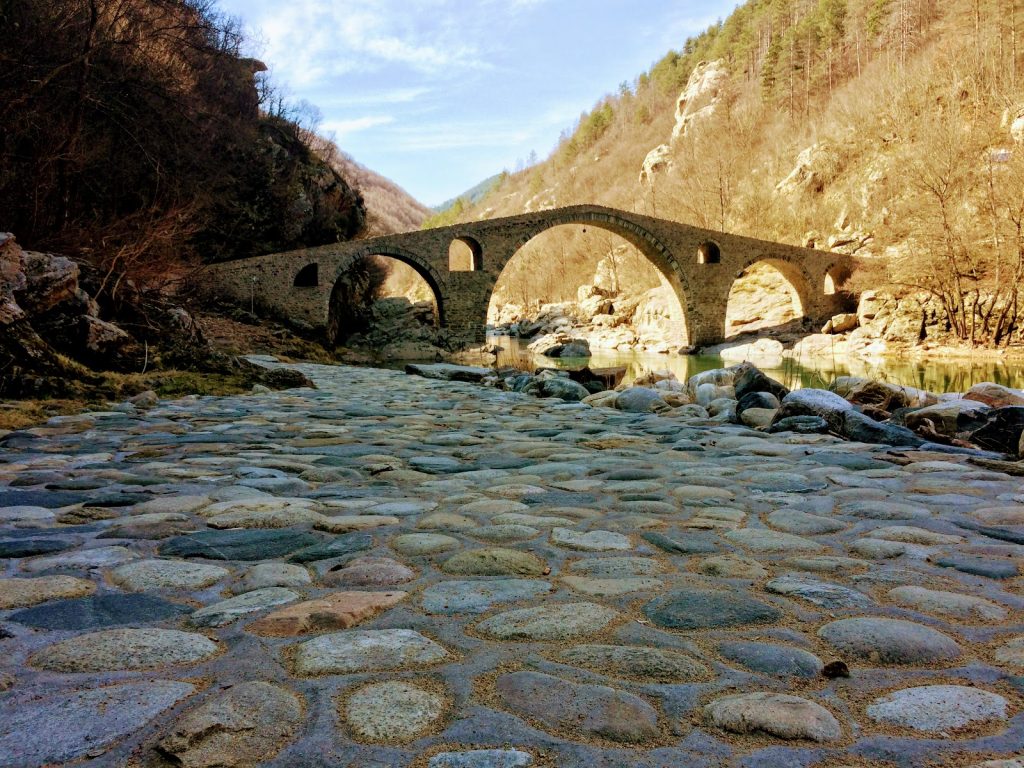
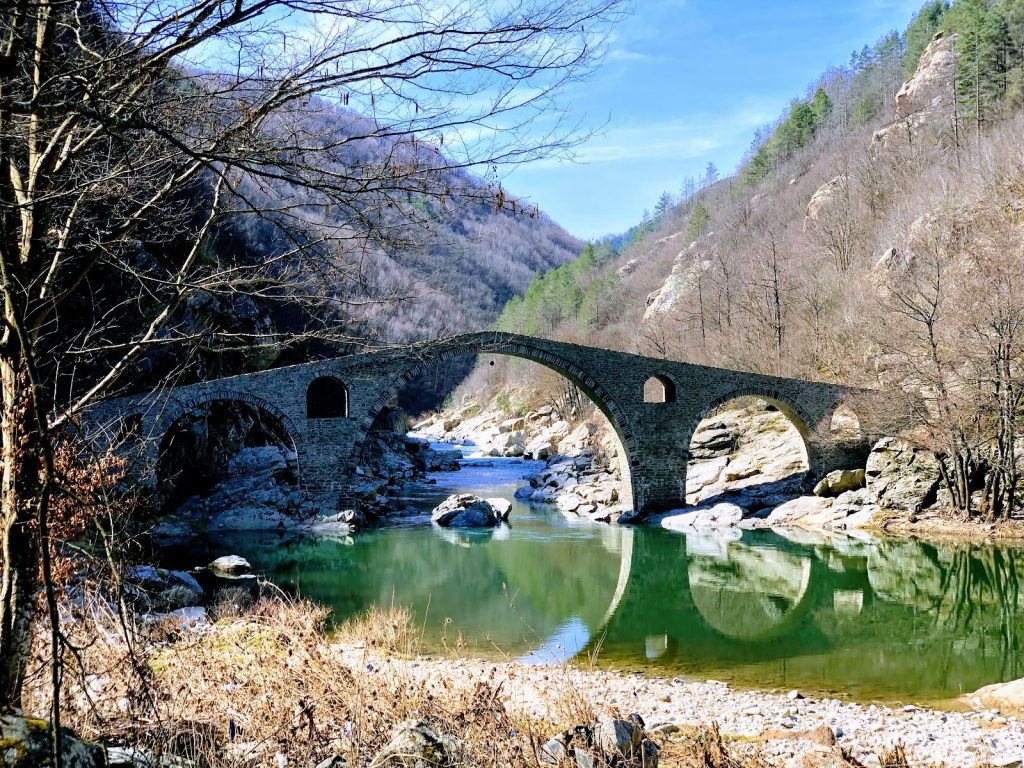
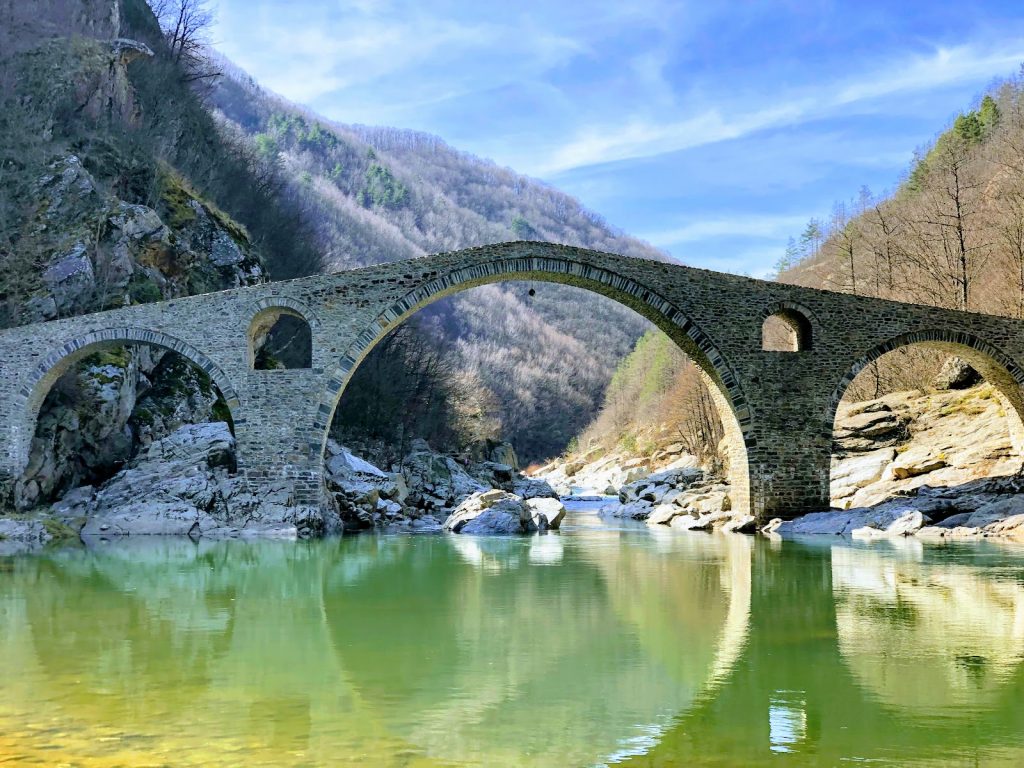
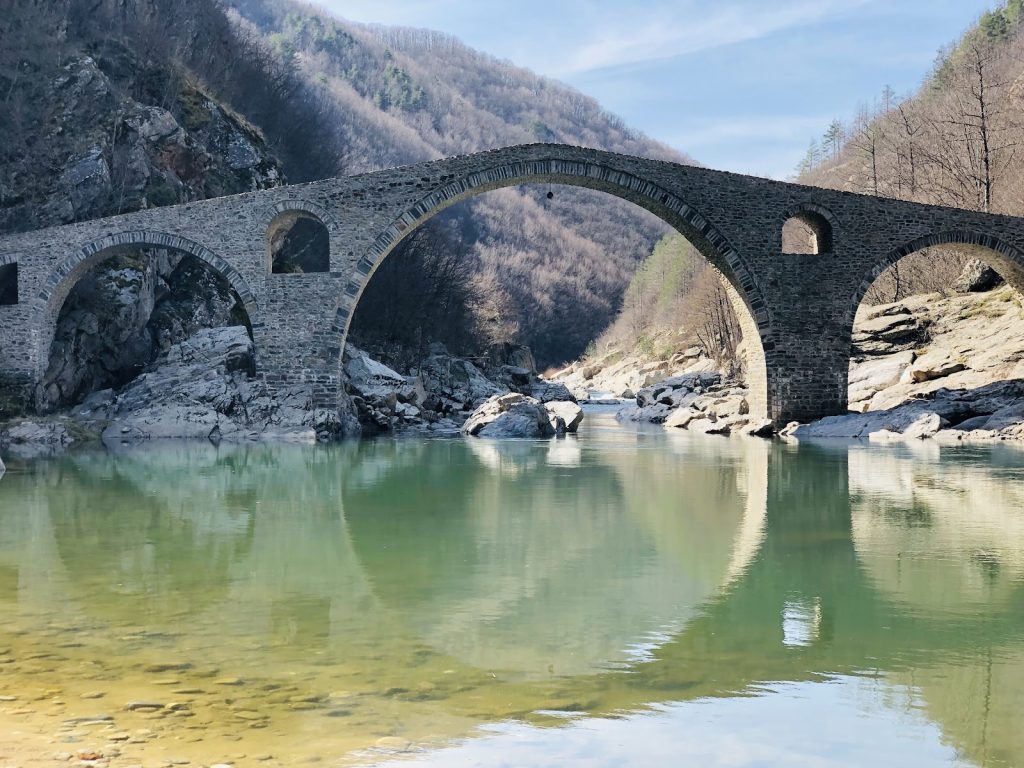
In less than an hour you come out into the bed of the Arda river at its confluence with the Egridere. Before your eyes, amid the ash-grey rocks and the muddy waters of the Arda, a huge stone bridge with three arches stretches out its majestic form.
At the time it was built, people had no other way to express their amazement at its strength than to say: ‘Ardinski sheytan’, that is, the devil's work.
It is not known how old the bridge is, but it is thought to date from Roman times.
It is 56 m long and 3.5 m wide. The central arch is 11 m high and the side arches 7 m each. The river winds a great deal at the place where the bridge was built. The bridge is in harmony with its surroundings and makes a majestic sight.
The angle of the front stones under the central arch, set to break the force of the water, is calculated so that the water that would undermine the bridge's foundations is turned aside and digs a large hole in the rock. The great master builder set the rock, not his own creation, against the force of the water. The old Roman road from Philippopolis (Plovdiv) to the Aegean coast crossed this bridge.