
PHOTOS
VIDEOS
IN BRIEF
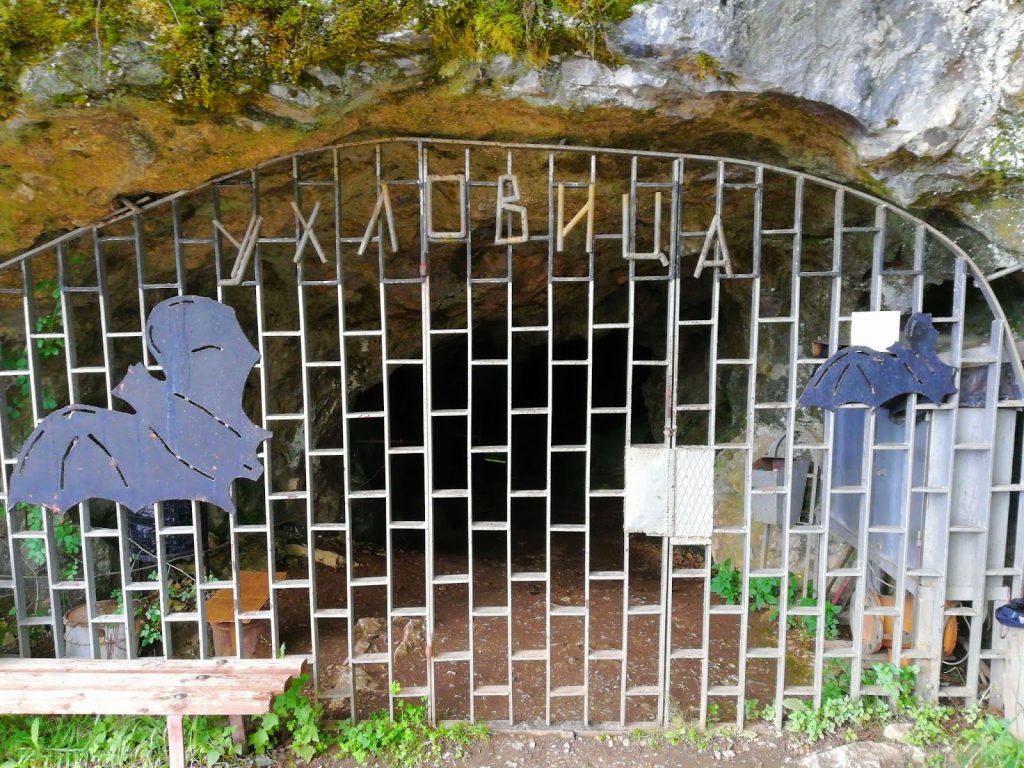
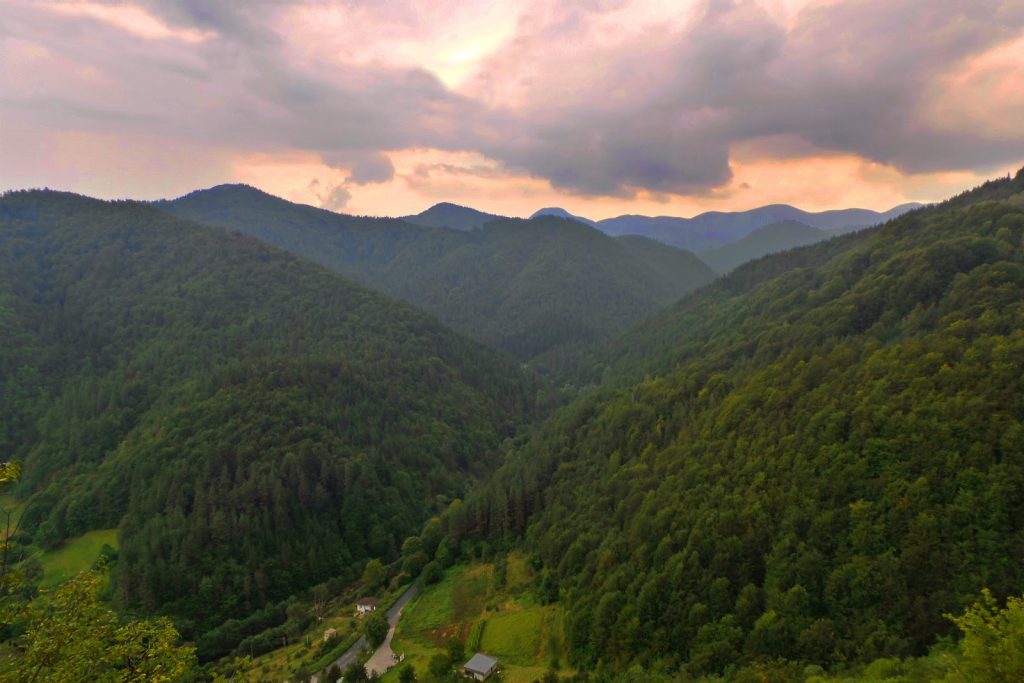
Uhlovitsa Cave is one of the underground palaces of the Rhodopes. On 4 May 1979 it was declared a natural landmark. Its captivating beauty lies tucked away on the slope of the left bank of the Arda river. The area around the cave is called Sinite Virove, and the village of Mogilitsa is notable for the old Agushev konak (mansion).
The name of the cave is linked to the uhlovitsa, a night bird typical of the area. The cave was mapped by cavers from Chepelare, D. Raychev, G. Raychev and others.
Although it zigzags, the trail from the road to the cave is steep.
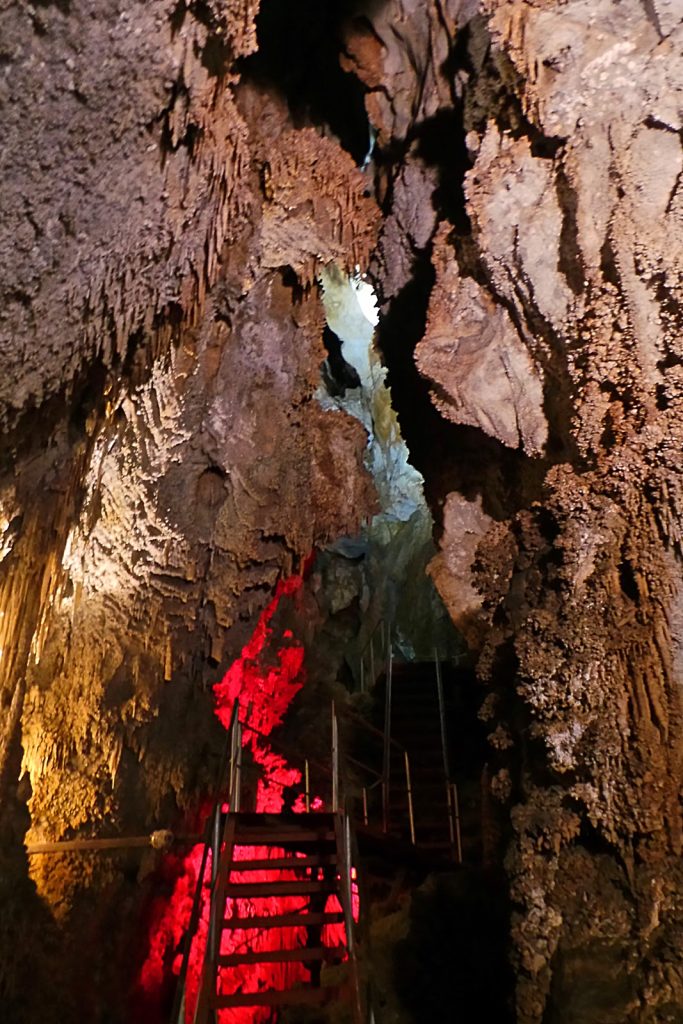
The cave is partly equipped for visitors: 288 iron steps and 16 iron platforms have been built. Uhlovitsa Cave has received visitors since 1983. Because its area falls within the border zone, a special permit used to be required to visit it.
Hall of Chasms
Right after its entrance begins the Hall of Chasms. It forms the upper level of the cave. The hall's name is linked to the four chasms in its rear part. Their deep throats lead to the lower level of the cave.
Great Column
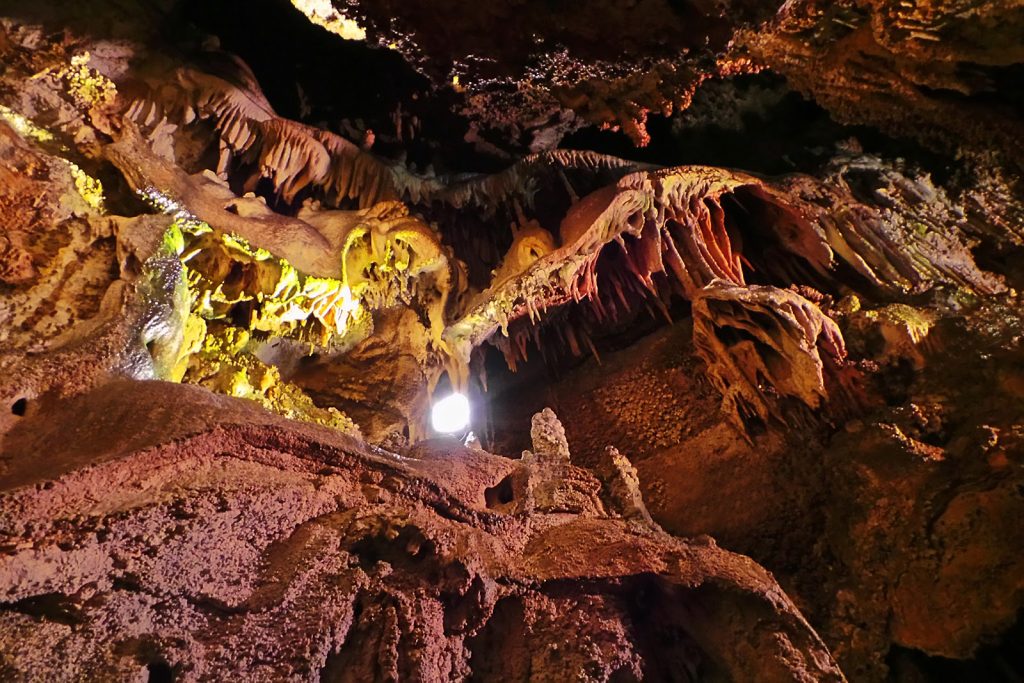
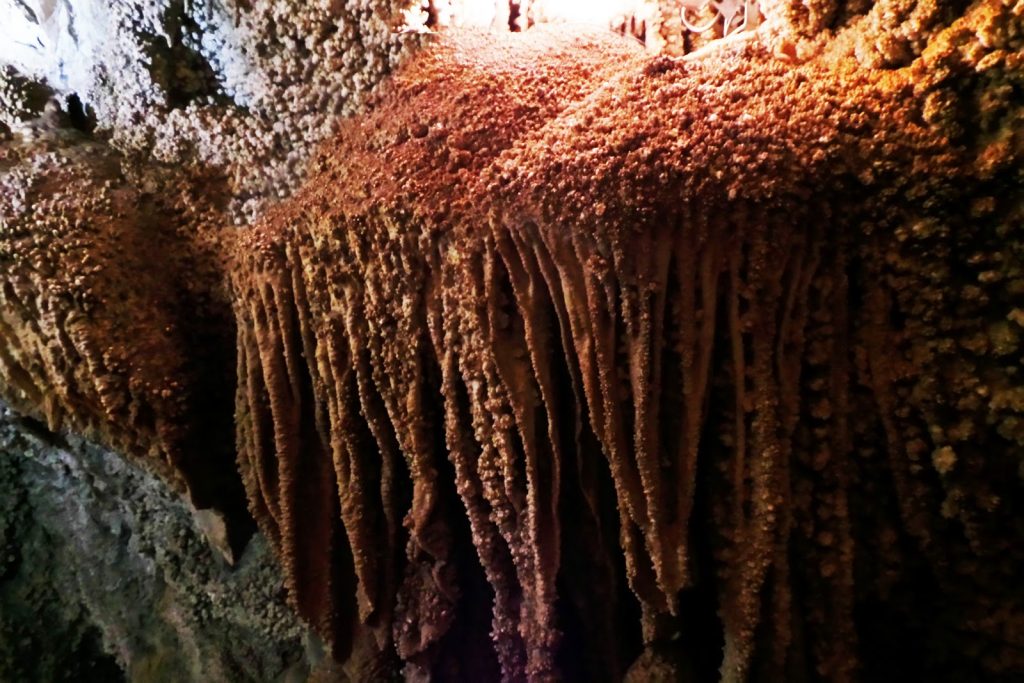
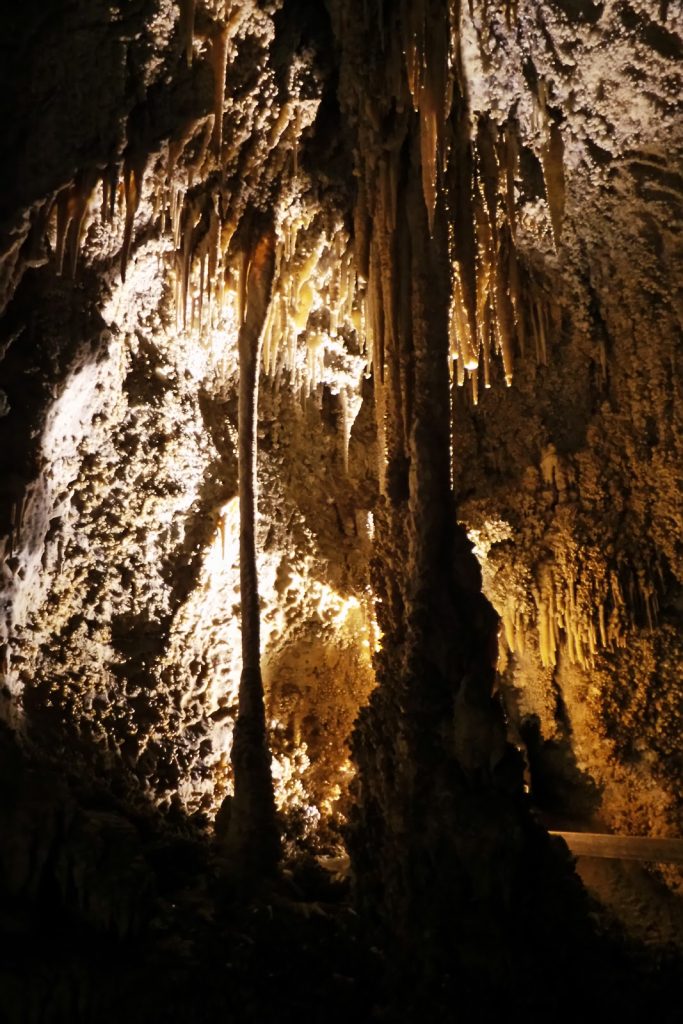
To the left of the visitor path is the Great Column with a circumference of 4.2 m. The Hall of Chasms is also notable for the stalactites hanging from the ceiling, which resemble udders. The small stalactites, which in the western part of the hall are tinted brown by iron hydroxides, are very beautiful.
Corridor of Corals
Steep iron stairs lead down to the lower level of Uhlovitsa. This level is a long and fairly narrow gallery. It is the most beautiful part of the cave. The walls of the gallery are covered with fairy-tale sinter formations that look like a bouquet of corals, helictites, warts and other bizarre formations. That is why it can be called the Corridor of Corals.
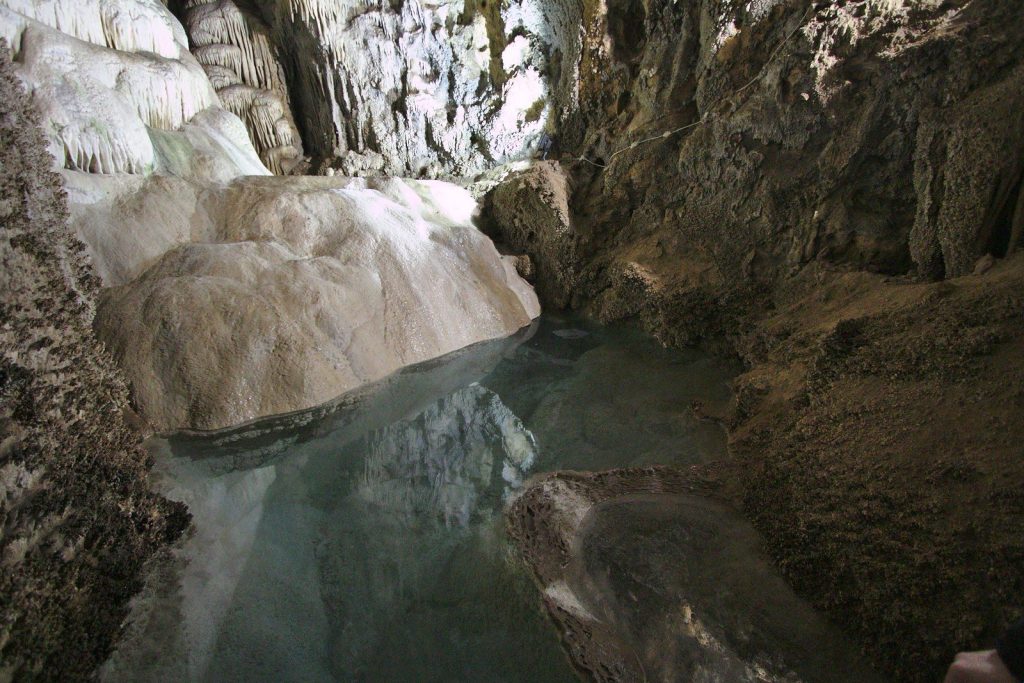
It is hard to describe this beautiful corner of Uhlovitsa. The ceiling of the corridor is decorated with thousands of mostly small stalactites of various shapes. The helictites and corallites formed below the level of a lake whose waters once stood in the gallery. These karst waters favoured the formation of helictites on the surface of the stalactites submerged in them, and of corallites on the walls of the corridor. At the northern end of the part of the gallery equipped for visitors two sinter lakes have formed, which are full of water in winter and spring.
Several species of bat live in Uhlovitsa, the most numerous being the greater and the lesser horseshoe bat.
How the cave formed
Uhlovitsa Cave is carved into Proterozoic marble. Given the relative height of the entrance to Uhlovitsa, its formation may be assumed to have begun 3.5 million years ago.


