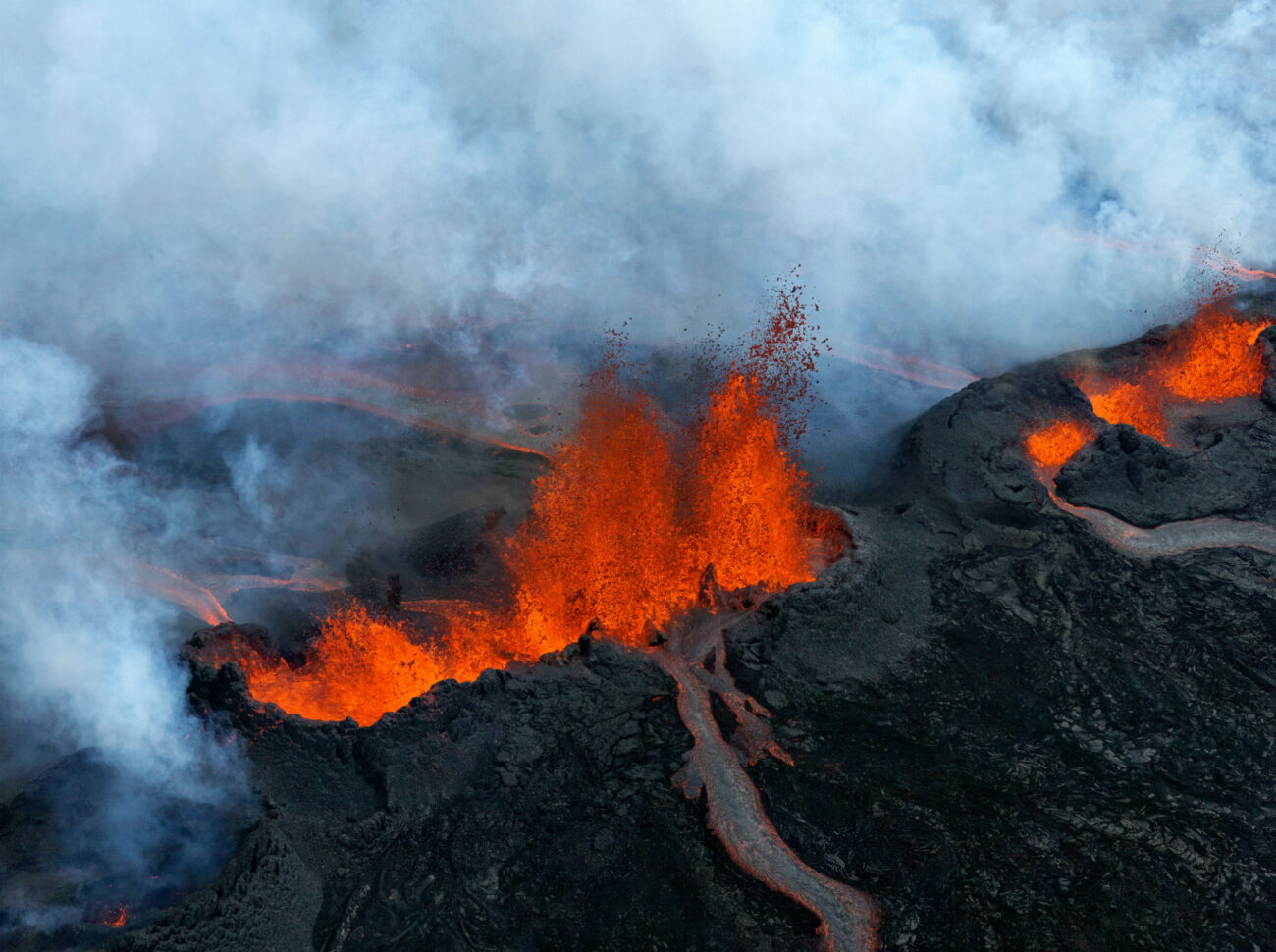
The geological history of the Rhodopes begins as far back as the Archaean and the Proterozoic, that is, when life on Earth was still in its infancy. At that time a deep and extensive depression of the Earth's crust (a geosyncline) stretched here. It was filled by the waters of a vast basin. Sands, clays, gravels and limestones were laid down in it. From time to time the calm life of this area was disturbed by violent volcanic eruptions, which poured out lava of varying composition that solidified on its floor. Later it sank even deeper, and there, under the influence of high temperature and great pressure, the rock masses changed fundamentally. They turned into crystalline, metamorphic rocks – gneisses, amphibolites, marbles – which are now found all over the Rhodopes.
The Palaeozoic
In the Palaeozoic the Rhodope region went through a new turbulent period. Some of its south-easternmost parts once again subsided and were buried under various sediments. At the same time thick lava masses of diabase rock poured out here, and later they too were metamorphosed. Towards the end of the Palaeozoic mighty movements of the Earth's crust set in, accompanied by its folding and rupturing. At the base of the mountain, in many places, huge bodies intruded – batholiths of dark heavy rocks (serpentinites) and also of granites. These movements also created a wide variety of geological structures in the Rhodopes, and the most recent geological history of the mountain is largely linked with their development. Several huge anticlines took shape in the Rhodopes, cut through by the deep gorges of the rivers.
The Tertiary
At the end of the Old Tertiary deep depressions formed after strong faulting and rupturing, and the waters of relatively warm basins flooded into them.
The Palaeogene
At the end of the Palaeogene these basins became the centre of grandiose volcanic activity. Andesitic and rhyolitic lava poured out over large areas, especially in the Eastern Rhodopes.
The Oligocene
And finally, in the Oligocene, which was preceded by a new uplift of the region, the present outline of the Rhodopes was created. At that time many fault lines formed, along which the mineral waters gushed out.