During the years of armed resistance (1941–1944) a large part of the Rhodope population showed great activity and self-sacrifice.
The partisan movement grew in the Rhodope region, and its strongest and surest support was the exploited and wronged population. A number of partisan detachments and brigades waged an active struggle against the enemies of the people in this region.
Among them were the Chepinets detachment, which later grew into a brigade operating in the Western Rhodopes and mainly in the Chepino Valley; the First Plovdiv Brigade Georgi Dimitrov, whose area of operations lay between the Vacha and the Chaya rivers; and the Second Plovdiv Brigade Vasil Kolarov, operating east of the Chaya, which was joined by the Kolyo Shishmanov detachment, operating in the Smolyan area. In the Western Rhodopes the heroic Razlog partisan detachment Nikola Parapunov was active.
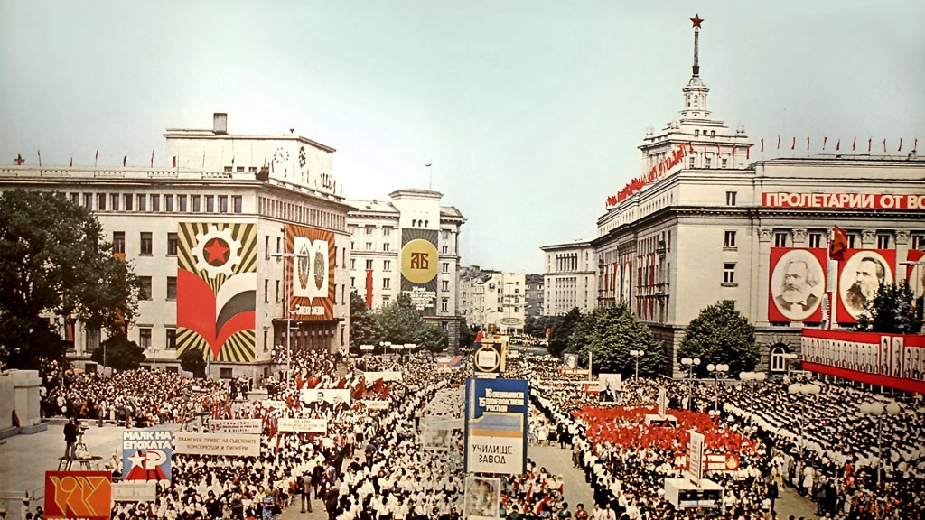
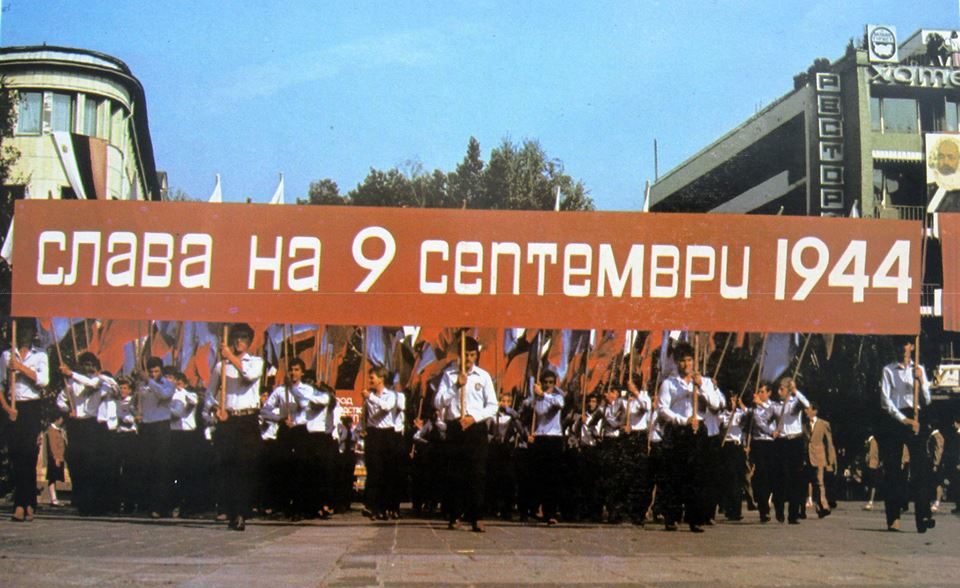
Led by the Bulgarian Communist Party, the population rallied in the ranks of the Fatherland Front and on 9 September 1944 won its liberation.
Important events in political life after 9 September 1944
- Elections for the 26th Ordinary National Assembly – 18.11.1945
- Referendum on a People's Republic – 8.9.1946
- Elections for the Grand National Assembly – 27.10.1946
- Adoption of the first republican Constitution – 4.12.1947
The most characteristic feature of the socialist period is the nationalisation of private industry and the banks, carried out at the end of 1947.
The socialist sector established complete dominance in industry. In 1948 the share of state and cooperative enterprises in total industrial output was 91.7%.
Historic and revolutionary for the population of the Rhodope region was the Decree-Law on the Equalisation of Persons of Both Sexes, adopted in October 1944. This law proclaimed the full equality of men and women ‘in all areas of economic, state, cultural and socio-political life’. A decisive blow was struck against the centuries-old, religious and obscurantist attitude to women in the Rhodopes. And opportunities never seen before opened up for their active and equal participation in all areas of public life.
The victory of the socialist revolution found proverbial economic and cultural backwardness in the Rhodopes. Immediately after 9 September 1944 the population was destitute, and illiteracy, especially in the eastern part of the mountain, was almost universal. That is why, alongside guaranteeing the necessary political and civil rights for the population of this region, the party and the government took a number of concrete measures to end hunger and misery in the Rhodopes, to eliminate disease and gradually to improve the material and cultural situation of the population.
As early as April 1945 the National Committee of the Fatherland Front examined the situation of the Rhodope population in detail and proposed to the government that it meet the population's most pressing needs as soon as possible.
The National Committee
The National Committee of the Fatherland Front proposed that, as a first step, the population be supplied with the most essential foodstuffs and clothing; that fodder be provided for the livestock; that the law on housing and rents in forest areas be repealed; that timber for building homes be released to the population at affordable prices; and that well-trained teachers be sent to the Rhodope settlements. At the provincial conference of the Fatherland Front in Plovdiv, held in December 1944, it was reported that nowhere in the country could one find so many ‘half-dressed and barefoot people’, packed so closely together, as in the Rhodope region.
At the Fifth Party Congress (18–25.12.1948)
G. Dimitrov stressed: ‘It is necessary, through the industrialisation and electrification of the country and the mechanisation of agriculture, to achieve in 15–20 years what other countries, under other conditions, have achieved in a whole century.’
Before the party congress G. Dimitrov also stressed that the sources of funds for the country's industrialisation should be sought mainly within the country. ‘Our people – he declared – will rely above all on their own strength and on the resources of their own country.’
The important role of the Rhodopes for the country
The Rhodope region had an important part to play in developing the most important branches of the country's economy – energy, ore mining and others.
As early as the first five-year national economic plan, the party and the people's government paid serious attention to exploring and developing the wealth of ore and non-ore minerals in the Rhodopes, to surveying and making rational use of hydropower sources, to developing forestry, to increasing the yield of quality tobacco, and so on.
Construction of enormous scale and pace unfolded in the Rhodopes.