Name
The chamois, diva koza (literally wild goat), has no other name in Bulgaria. Besides being the name of the species, koza (goat) is also used for the females. The male is called a kozel (billy goat), and the young – this year's and last year's – kozleta (kids).
Description
The chamois is the only naturally occurring member of the hollow-horned family (Bovidae). It has a stocky body.
- Its length is 120–130 cm.
- Height – 80–85 cm.
- Males weigh 40–45 kg, and females 30–35 kg.
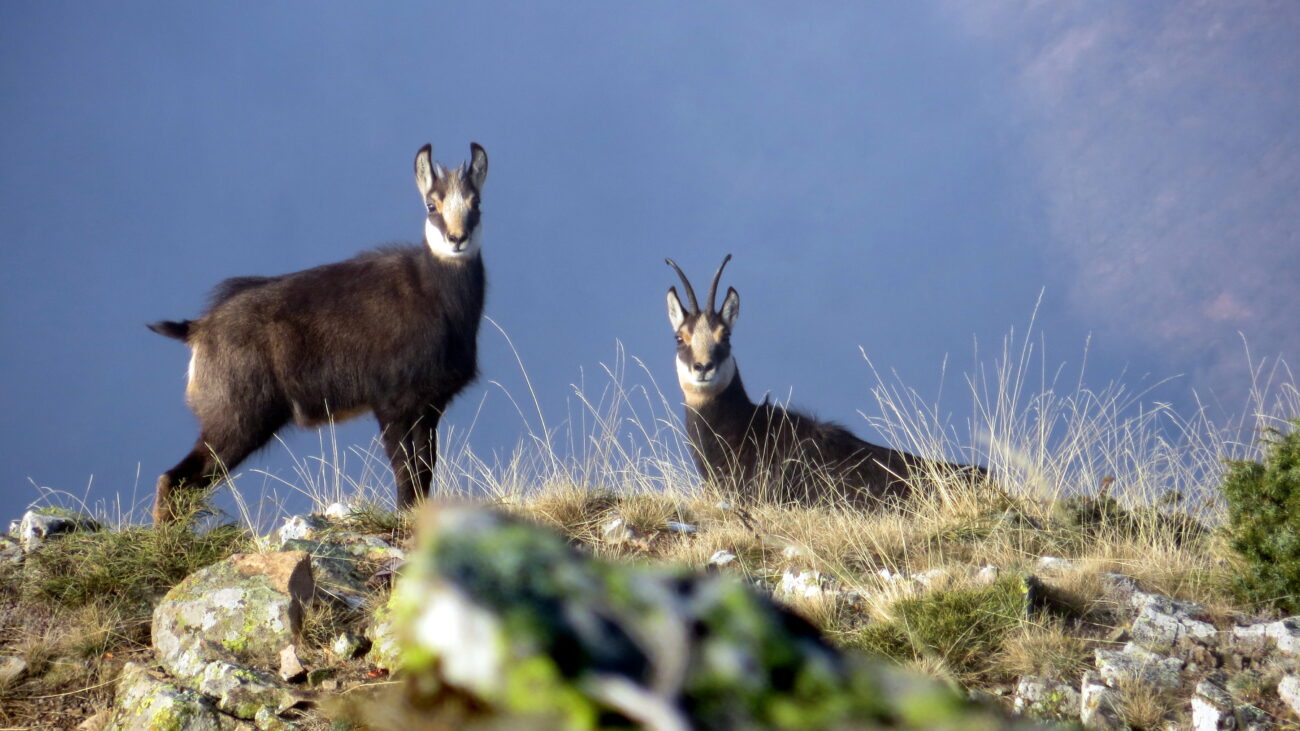
Both sexes have horns. At the tip they curve back and down like a hook. In males the hook is much more pronounced. The horns grow throughout the animal's life, especially fast up to the 5th year. Because their growth slows down in winter, rings form on them, from which we can tell the exact age.
The chamois is dark grey to black in winter and brownish grey in summer. The head and neck are creamy yellow, with a characteristic dark stripe across the eye.
Distribution
The chamois lives in the high mountains of southern Europe. It is most numerous in the Alps and the Carpathians. In Bulgaria it is found in Rila, Pirin, the Rhodopes and the Balkan Mountains. Its population in Bulgaria is about 1,800 animals, of which about 800 live in the Rhodopes. They form several populations isolated from one another – in the Peshtera, Devin, Chepelare and Dobrostan areas, and in the Smolyan area below Syutka peak. The Rhodope chamois lives in forest habitats, and here it comes down to 800–850 m above sea level. It lives among steep, inaccessible crags where, in Bulgaria, it is the only large mammal.
Biology
It ruts in November and December. It gives birth to one kid, rarely two. It has a strong herd instinct. In summer it forms smaller herds of several mothers with their kids from this year and the year before. In winter it forms larger herds. After their fourth year the males move about on their own.
In the Rhodopes the chamois has a more varied diet than in Rila and Pirin. Besides herbaceous plants, its diet includes the buds of various trees, the leaves and stems of bilberry and bramble, mosses and lichens.
Natural enemies
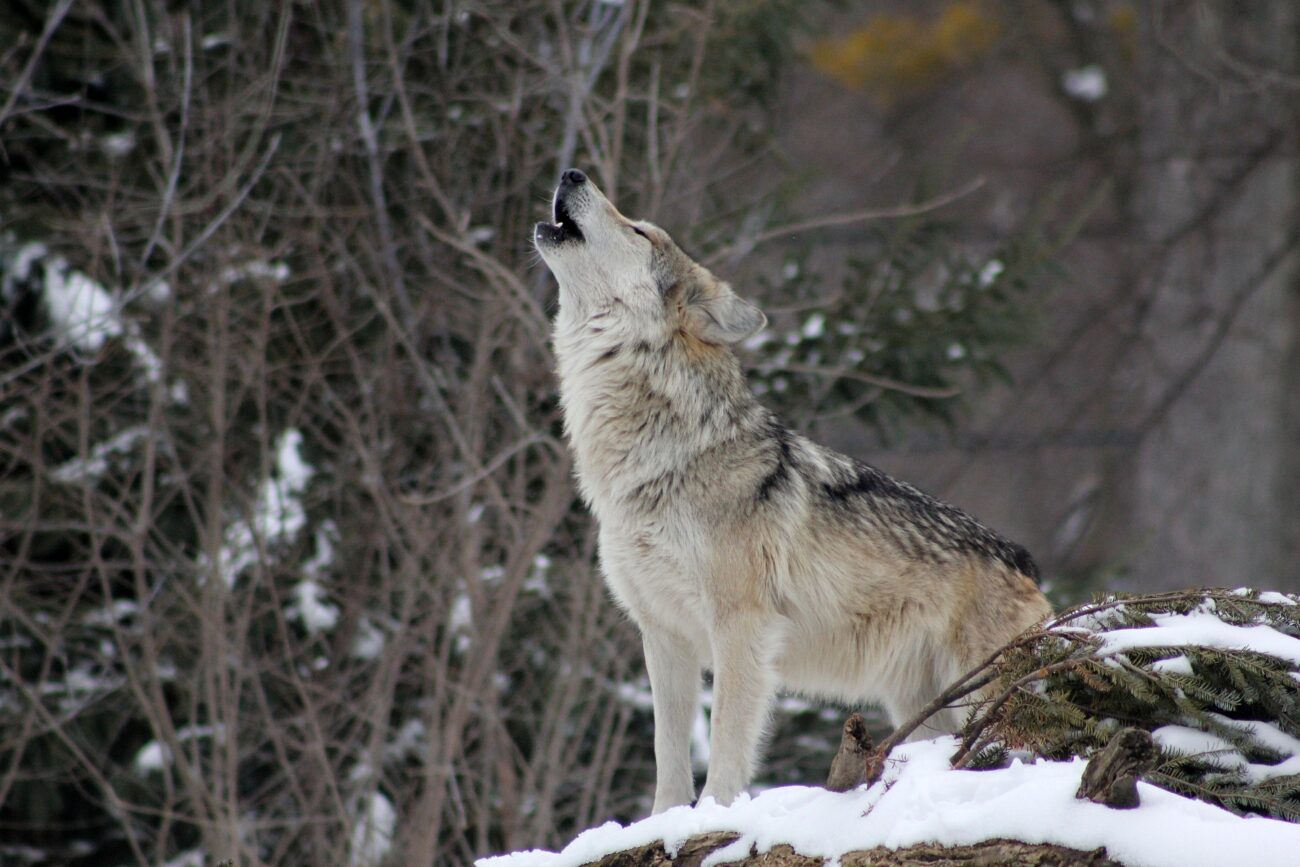
In the Rhodopes the natural enemies of the chamois are wolves, while young kids can also fall prey to other predators.