Name
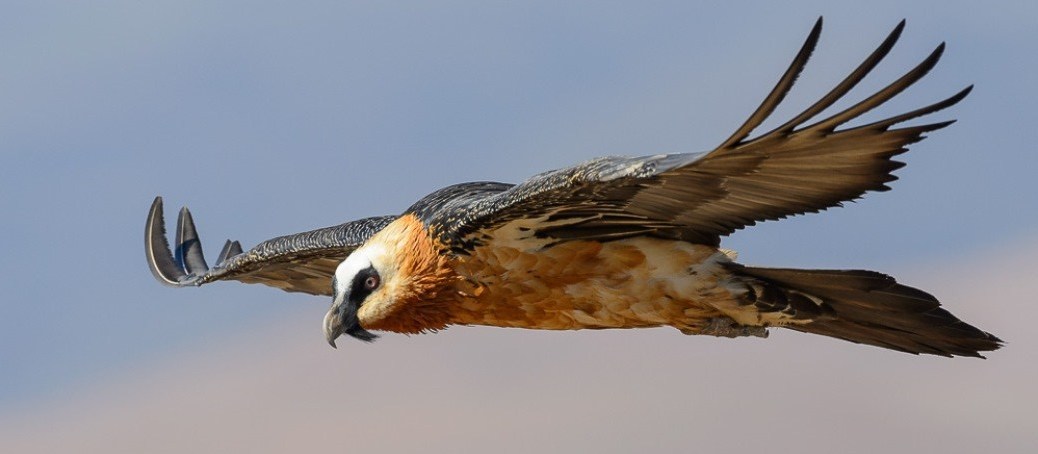
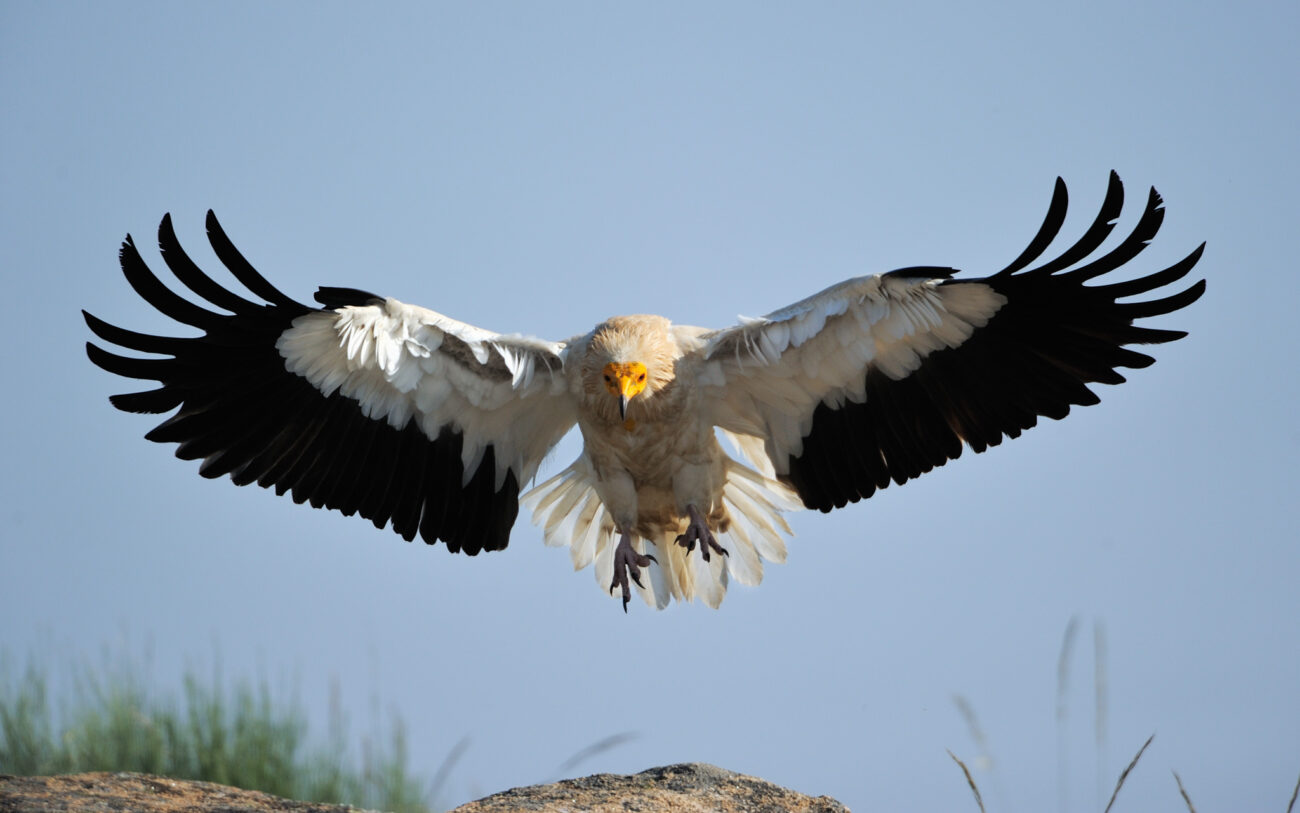
As you might guess, its Bulgarian name, beloglav leshoyad (white-headed vulture), comes from the colour of its head.
Description
- Body length – 110 cm.
- Wingspan – up to 260 cm.
- Weight – about 7 kg.
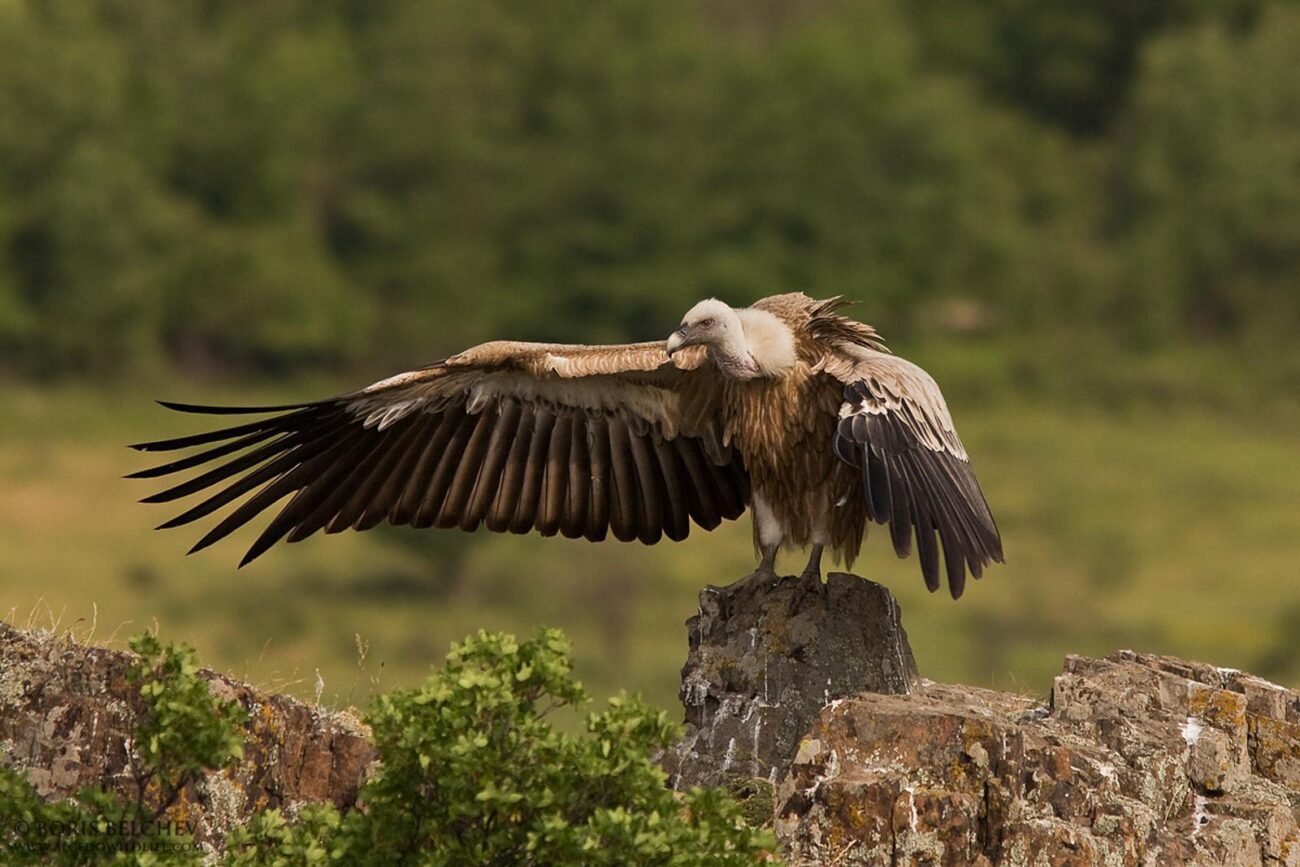
A large, light-brown bird with a dark grey neck, at the base of which there is a white collar of down feathers.
Distribution
It is found in southern Europe, North Africa and southern Asia. By several accounts, the griffon vulture was once a fairly common breeding bird in the Eastern Rhodopes. In the 1950s, large-scale construction of three big reservoirs began there (Ivaylovgrad, Studen Kladenets and Kardzhali). After years of disturbance from blasting and the rumble of dump trucks, excavators and other construction machinery, the birds left the area, and they came back once everything had quietened down.
Biology
It feeds mainly on carrion. It spends the day searching for food, gliding at a great height, practically invisible to the human eye. As soon as it spots the carcass of a dead animal, it drops sharply with its wings half folded. As soon as one of the vultures spots food and descends to it, the others follow at once, and within a very short time all the members of the species nearby have gathered. Fights over the carcass are common.
- Nest – on high cliffs; it sometimes forms small colonies. It returns to the same nest every year.
- Eggs – 1 a year
- Incubation – lasts 48–53 days. Both parents incubate. The chick leaves the nest at about 3 months.
- Raises one brood a year.
- Monogamous birds.